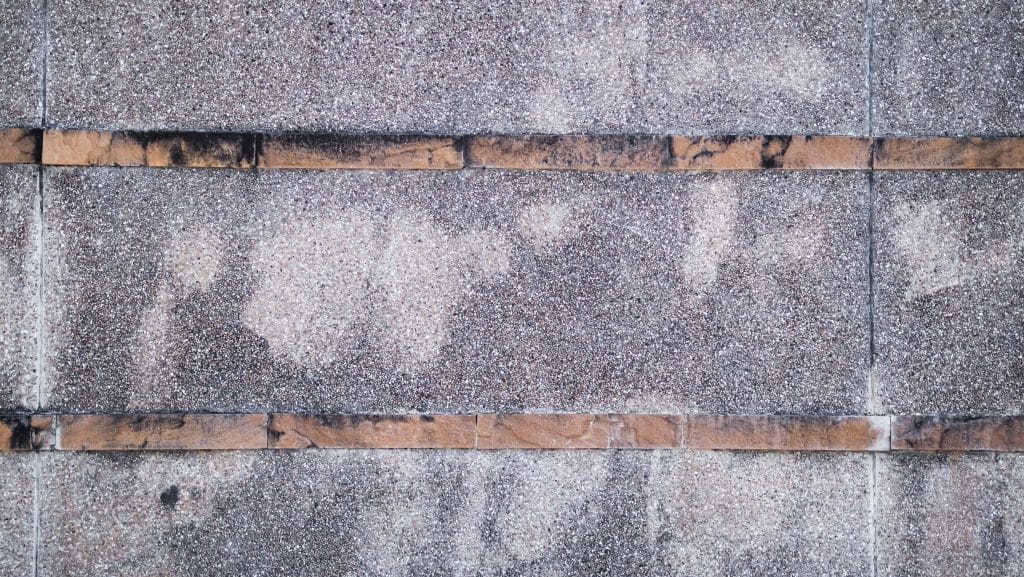




Commercial Roof Inspections in Harahan, LA
Big Easy Roofing inspects commercial and low slope roofs across Harahan and east bank Jefferson Parish. On a commercial roof what actually decides whether a repair holds or a replacement can wait another year is not the visible surface, it is the moisture state of the insulation underneath. So a real inspection is a moisture survey with a walk-through, not a walk-through with a moisture question at the end.
Harahan commercial roof inspections at a glance
A commercial inspection here is a moisture survey plus a walk-through, with a written report and a plan for the next visit. The moisture survey is what separates a real inspection from a photograph, because the insulation under the membrane decides whether repairs hold and that layer is invisible from the surface.
The core deliverable
Infrared, capacitance or nuclear survey (or a combination), plus a walk-through covering membrane, drainage, penetrations and perimeter. The report names what was found, where, and what the recommended action is with its urgency. Call Big Easy Roofing on (504) 800-8196.
Which office covers you
ZIP 70123 covers Harahan city limits and the unincorporated Elmwood and River Ridge areas. Most 70123 commercial buildings file with Jefferson Parish rather than the City of Harahan Regulatory Department on (504) 737-6765. An inspection itself is not permitted work, but a repair or replacement scoped from one is.
Recurring programme
Once or twice a year on most commercial roofs, plus a visit after any named storm. Every visit builds on the last, so a chronic issue becomes visible in the file even where any single visit would miss it. That is the whole point of a programme rather than a one-off inspection.
What we do not do
Louisiana R.S. 37:2159.1 stops a roofing contractor from interpreting an insurance policy on a building owner's behalf. We describe the condition and recommend the work. Cover is a question for your insurer.
The methods
Infrared reads temperature after sunset. Capacitance reads electrical impedance and is faster on a small area. Nuclear counts hydrogen and is the most accurate. Each one has a case where it fails, so the standard practice is a first pass with the appropriate method and a confirmation pass where the reading matters.
Written report
Every finding is photographed, located on a roof plan, described, and paired with a recommended action and its urgency. The report is yours and it goes into the file so the next visit builds on it rather than restarts from scratch.
The single thing that decides whether a commercial roof is inspectable properly is whether the insulation under the membrane is being measured. The visible surface tells you what the membrane is doing today. The insulation below it tells you what the membrane is likely to do next, because a wet insulation layer defeats a membrane that looks fine and shows up months later as a leak that no repair to the membrane will hold. So a commercial inspection worth paying for is a moisture survey with a walk-through, not a walk-through with a moisture question at the end.
The other thing that separates a real programme from a one-off visit is a written file that builds up over years. A single inspection is a snapshot. A programme with two visits a year over five years is a record, and it is what makes a chronic issue visible where any single visit would miss it. That file also matters at replacement time, because the buying decision on a commercial reroof is much easier with five years of documentation than without.
Three moisture survey methods and where each one fails
None of the three is authoritative on its own. Each has its own strengths and its own blind spots, and the standard practice is to pick the method that suits the roof and to confirm any important reading with a second method.
| Method | What it actually measures | Where it works well | Where it fails |
|---|---|---|---|
| Infrared thermography | Temperature differences at the membrane surface after sunset | Large open roofs with clear access, on a dry night that follows a sunny day | Shaded areas of the roof (no thermal contrast), and standing water above intact insulation (false positive) |
| Capacitance / electrical impedance | The response of the assembly to a small AC signal, higher moisture reading higher | A focused area that a walk survey has already flagged, quick confirmation over a suspected wet zone | Conductive contamination on the membrane surface can read as moisture where there is none |
| Nuclear hydrogen | Count of hydrogen atoms in the assembly below the membrane | When the readings from the other two methods disagree, or the stakes on the number are high | Requires a licensed operator, is the slowest of the three, and the equipment is not on every truck |
| None of the above | Nothing measurable | Never | A "moisture survey" done from a walk-through with no instrument is what people call an inspection because it is faster and cheaper. It measures nothing under the membrane |
The highlighted row is the commonest first-pass method on a large commercial roof and the one whose blind spots are easiest to work around. Where a reading matters, the second method confirms it. Nothing on this table is a substitute for the walk-through, which is where surface defects, drainage and penetrations are recorded. Call (504) 800-8196 and we will pick the method to suit your roof.
What an inspection is, and what it is not
A commercial inspection is a condition survey with a moisture component and a written report. It is not a code inspection, it is not an insurance judgement, and it is not the kind of inspection an Act 239 permit generates on a reroof.
Not a code inspection
The Act 239 permit inspection under R.S. 37:3737(I) applies when a reroof or new construction is being permitted, and the office that issued the permit is the one that inspects. A condition inspection is our own survey of an existing roof, on our own written scope, and it is a separate document from anything the office produces.
Not an insurance judgement
Louisiana R.S. 37:2159.1 stops a roofing contractor from interpreting an insurance policy or advising a building owner on cover. Our report describes what we found and recommends the work. What your policy pays is a question for your insurer or your adjuster.
Yours to keep
The report is yours whether or not you use us for any recommended work. It sits in the roof file, so the next visit builds on it, and it is the record we hand over at a sale or a lease renewal where the roof condition is a due diligence question.
A commercial reroof needs its own permit
Where a condition inspection results in a reroof, that reroof is a permitted job under R.S. 37:3737(I)(1), inspected against IBC Chapter 15 by the office that issued the permit. On a 70123 commercial building the office is more often Jefferson Parish than the City of Harahan.
What the report contains
Photographs of every finding, located on a roof plan; a description of the finding and what caused it; a recommended action and its urgency; and a suggested date for the next inspection. Where the moisture survey found wet insulation, the wet zones are marked and the recommended scope is written against them.
The report is written to be readable by a facilities manager and by a roofing contractor, without either side needing the other to translate. That is what makes it useful in a bid process, at a sale, or in the annual budgeting cycle.
How to use the report at replacement time
A commercial replacement decision is much easier with a file behind it than without. The file names when each defect first appeared, how it has progressed, and which repairs have held. A quote for a full replacement can then be read against evidence rather than against a sales pitch, and a recover vs tear off decision has documentation to support it.
This is the practical value of a recurring programme rather than a one-off inspection: the file gets more useful with every visit, and it is what the replacement page relies on when a full reroof is finally on the table.
The programme cadence and what changes it
Most commercial low-slope roofs sit well on one or two inspection visits a year, plus a visit after any named weather event. Three things move that cadence: the age of the roof, the sensitivity of what is under it, and whether the roof has already had a wet area found.
The age of the roof
A newer roof under its manufacturer warranty is on a shorter cadence than an older one, because the warranty conditions usually require documented annual inspections to remain valid. An older roof past the warranty is on a shorter cadence for a different reason, because the frequency of defects rises. The two extremes end up on similar visit schedules for opposite reasons.
What is under the roof
A warehouse of finished goods and a data centre both sit under commercial roofs, and one of them can absorb a leak that would ruin the other. Where the interior is sensitive, the inspection cadence is set by the cost of a missed leak rather than by the roof itself. A sensitive interior usually pays for quarterly rather than annual visits.
Whether a wet area is on the file
A roof with a wet area already documented is on a shorter cadence than one without, because that area needs its progression tracked and its repair scoped. Wet insulation is not a static finding. It spreads, or it dries once the water source is fixed, and the file records which is happening.
Big Easy Roofing Process
Four steps, and the moisture survey happens before the walk-through because the reading it produces changes what the walk-through is looking for.

Book the inspection and set the method
The method is chosen against the roof and the goal. Infrared on a large open low slope roof after sunset. Capacitance where a wet area is already suspected. Nuclear where a previous reading is being confirmed.
Run the moisture survey
The survey covers the whole roof for a first-pass inspection, or the specific area for a targeted one. Readings are recorded with location, so any wet zone can be found on the roof and revisited in a later visit.
Walk the roof
Membrane and its age, drainage patterns, penetrations, perimeter and any rooftop equipment. Every defect is photographed and located on the plan, and the walk-through looks specifically at the areas the moisture survey flagged.
Write the report and set the next visit
Findings, causes, recommendations, urgency, and a date for the next inspection. The report goes to you and it goes in the file, so the next visit builds on it. Call (504) 800-8196 to book.
Everything else we do in Harahan
The rest of the Big Easy Roofing services available in Harahan, each with its own page and written scope. Where an inspection finds a scoped defect or a wet area, the commercial repairs page is where that gets priced, and the commercial replacement page is where a whole-roof decision lives.
Roof Replacement in Harahan
Read More
Roof Repairs in Harahan
Read More
Roof Inspection in Harahan
Read More
Hail Damage Roof Repair in Harahan
Read More
Storm Damage Roof Repair in Harahan
Read More
Storm Damage Emergency Response in Harahan
Read More
Emergency Roofing in Harahan
Read More
Roof Leak Detection in Harahan
Read More
Roof Maintenance in Harahan
Read More
Roof Coating in Harahan
Read More
Roof Ventilation in Harahan
Read More
Roof Weatherproofing in Harahan
Read More
Roof Restoration in Harahan
Read More
Roof Flashing Repair in Harahan
Read More
Fascia Board Installation and Repair in Harahan
Read More
Gutters and Downspouts Installation in Harahan
Read More
Gutters and Downspouts Repair in Harahan
Read More
Siding Installation in Harahan
Read More
Asbestos Roof Removal in Harahan
Read More
Roof Insurance Claims in Harahan
Read More
Soffit Installation in Harahan
Read More
Soffit Repair in Harahan
Read More
Commercial Roof Replacement in Harahan
Read More
Commercial Roof Repairs in Harahan
Read More
Commercial Hail Damage Repair in Harahan
Read More
Commercial Re-Roofing in Harahan
Read More
Commercial Roof Coating in Harahan
Read More
Commercial Elastomeric Coatings in Harahan
Read More
Commercial Roof Ventilation in Harahan
Read More
Commercial Roof Leak Detection in Harahan
Read More
Commercial Siding Installation in Harahan
Read MoreHarahan Commercial Roof Inspections FAQs
What a commercial inspection actually measures, how the three moisture survey methods differ, and how a recurring programme builds a roof file over years.