




Roof Ventilation in Covington, LA
Big Easy Roofing installs and corrects roof ventilation across Covington and St. Tammany Parish. The usual ventilation fault is not too few vents on the roof but too little intake at the eaves, and adding more exhaust to an attic that cannot breathe in makes it worse rather than better.
Covington roof ventilation at a glance
A ventilation upgrade is estimated at $400 to $2,500 depending on how much intake has to be created. The design target is the 1:300 net free area ratio, and the usual fault in this climate is intake at the eaves rather than exhaust at the ridge.
Estimated install
A single ridge vent retrofit sits at the bottom, a whole system with new soffit intake at the top. Call Big Easy Roofing on (504) 800-8196 and we will measure the attic before quoting.
Which office covers you
Ventilation work on its own is not the re roofing the 2025 rule covers, but where it is done as part of a re roof it falls inside that permit. Inside the Covington city limits the City permits; outside them St. Tammany Parish does. We confirm the position for that scope before it starts.
Design ratio
One square foot of net free ventilating area for every three hundred square feet of attic floor, split between intake and exhaust. Net free area is the open area of the vent, not the size of the hole it sits in.
Where the fault usually is
Adding ridge vent to an attic with blocked or absent soffit intake pulls air from the house below instead of from outside, which is the opposite of the intention. Intake gets measured first.
Typical duration
Most retrofits are a day or less. Cutting new soffit intake across a whole eave line takes longer than fitting exhaust at the ridge.
Warranty
Our workmanship warranty on the installation and the flashing around every vent, alongside whatever the manufacturer offers on the product.
Every figure on this page is an estimate, not a quote, and is subject to Big Easy Roofing sign off. Cost and timescale depend on size, pitch, access, weather, materials and whatever is found once work starts, so call Big Easy Roofing on (504) 800-8196 and we will come out and give you an estimate for your own roof.
Attic ventilation is the part of a roof nobody thinks about until something else goes wrong. It works by letting outside air in low at the eaves and out high at the ridge, so the attic runs closer to outdoor conditions than to oven conditions. When it is right you never notice it. When it is wrong you notice the symptoms and blame the covering.
The failure here follows a common shape. Somebody adds exhaust, because ridge and static vents are the visible half and the easy half, without checking whether there is any intake for them to draw through. An attic with plenty of exhaust and blocked soffits does not ventilate; it pulls conditioned air up out of the house. So the intake is measured first, and quite often the fix is opening what is already there rather than fitting anything new to the roof at all.
The vent types and what each one is for
Ventilation is a system rather than a product, and it only works if intake and exhaust are balanced. The table sets out what each type does, the estimated cost and roughly how much net free area each contributes, so the balance can be judged rather than guessed.
| Vent type | What it does | Estimated cost | Notes on net free area |
|---|---|---|---|
| Continuous ridge vent | Exhaust along the full ridge line | $450 to $1,200 | The most even exhaust available, and the usual first choice |
| Soffit intake, new or reopened | Intake at the eaves | $400 to $1,500 | Where the fault usually is. Often blocked by insulation rather than absent |
| Static box vents | Exhaust at high points | $300 to $700 | Simple and cheap, but ventilate only their immediate area |
| Gable vents | Cross ventilation through end walls | $250 to $600 | Can work against a ridge system by short circuiting the airflow |
| Powered attic fan | Mechanical exhaust | $500 to $1,200 | Rarely our first recommendation, and a poor idea on a leaky ceiling |
Estimated ranges, not quotes. Net free area is the open area of the vent rather than its overall size, and it is what the 1:300 ratio is calculated against, so two vents of the same physical size can contribute very differently. Call (504) 800-8196 and we will measure the attic and put the calculation in writing.
Ventilation is now inside the code a re roof is inspected against
This is new since 2025 and it is easy to miss entirely. The Louisiana law that brought in re roofing permits names the specific code chapters the work is judged against, and one of them is the chapter that carries attic ventilation.
What the law actually names
La. R.S. 37:3737(I), introduced by Act 239 of 2025 and renumbered by Act 881 of 2026. For one and two family dwellings, subsection (I)(2) requires permitting and inspection against International Residential Code Chapters 8 and 9 as adopted by the Louisiana State Uniform Construction Code Council.
Chapter 8 is the roof ceiling chapter
That is the chapter where attic ventilation requirements sit, so on a permitted re roof the ventilation is inside the scope of the code the work is measured against. That is a statement about scope, not a prediction of what any individual inspector will look at.
Which makes a re roof the moment to fix it
Ventilation is cheapest to correct when the covering is off and the ridge is already open. Doing it later means going back onto a finished roof to cut into it, which costs more and means new penetrations in new work.
Ventilation on its own needs no permit
A standalone ventilation retrofit is not roof construction or re roofing, so it sits outside the 2025 rule. Done as part of a re roof it falls inside that permit, and we confirm the position with the office that covers your address before that work starts.
What a badly ventilated attic does in this climate
Heat is the symptom people expect. Moisture is the one that costs money. Warm damp air that cannot leave an attic condenses on the underside of the decking overnight, and decking that is repeatedly damp delaminates, loses its grip on fasteners and shortens the life of the covering above it from underneath.
That is why a roof can fail early with nothing visibly wrong on top of it, and why an attic that smells musty or shows staining on the underside of the deck is worth taking seriously well before the covering is due for replacement.
Why more exhaust is not the answer
The instinct when an attic is hot is to add vents to the roof, and it is usually the wrong move. Exhaust without intake has to draw its air from somewhere, and the somewhere is the house below through every gap in the ceiling, which pulls conditioned air out and damp air in.
Balanced is the word that matters: roughly half the net free area low at the eaves and half high at the ridge. An attic with three ridge vents and no working soffits is worse off than one with a single vent and clear intake.
It is also why the cheapest useful ventilation job often adds nothing to the roof at all: clearing the soffits restores the intake the house already had.
What goes wrong in attics on Northshore houses
Three things are worth checking in a Northshore attic before buying anything, and two of them cost almost nothing to put right once someone has actually been up there and looked at the eaves from the inside rather than judging the roof from the driveway.
Insulation pushed into the soffits
When insulation is topped up, it very often gets pushed out to the eaves and blocks the soffit intake completely. From outside the vents look perfect. From inside the attic they are behind a wall of batt.
The fix is baffles at each rafter bay to hold the insulation back and keep an air path open, and it is one of the cheapest useful things that can be done to a roof. It is also invisible from the ground, which is why it goes unnoticed for years.
Exhaust systems fighting each other
Gable vents and a ridge vent on the same attic can short circuit each other, with air entering the nearest opening and leaving the next one instead of drawing along the whole attic. The vents all work; the system does not.
It is a design problem rather than a product problem, and it is usually solved by closing something rather than adding anything. That is a cheaper conversation than most roofing ones.
Bathroom fans discharging into the attic
A bathroom or dryer vent that terminates in the attic instead of through the roof or the wall puts warm wet air directly into the space you are trying to keep dry, every day. It is common, it is quick to spot from inside, and no amount of ventilation fully compensates for it.
Redirecting it properly is a small job and it belongs on the list before any new roof vents are considered, because otherwise the ventilation is being asked to remove moisture that should never have been there.
Big Easy Roofing Process
Three steps, and the first one happens inside the attic rather than on the roof, because that is where the answer usually is.

Measure the attic and the intake
Attic floor area measured, existing vents identified and their net free area totalled, and the soffits checked from inside for insulation blocking the intake. Photographed as we go.
Calculate against the ratio, in writing
The required net free area worked out against the 1:300 ratio, the existing figure set beside it, and the shortfall shown as intake and exhaust separately rather than as one number.
Fit, flash and verify
Vents fitted and properly flashed, baffles installed where insulation was blocking intake, and the balance rechecked afterwards. Call (504) 800-8196 to book the attic visit.
Everything else we do in Covington
The rest of the Big Easy Roofing services available in Covington, each with its own page, scope of work and written estimate. Ventilation work is often done at the same time as a re roof, when the ridge is open anyway and the cost of getting it right is lowest.
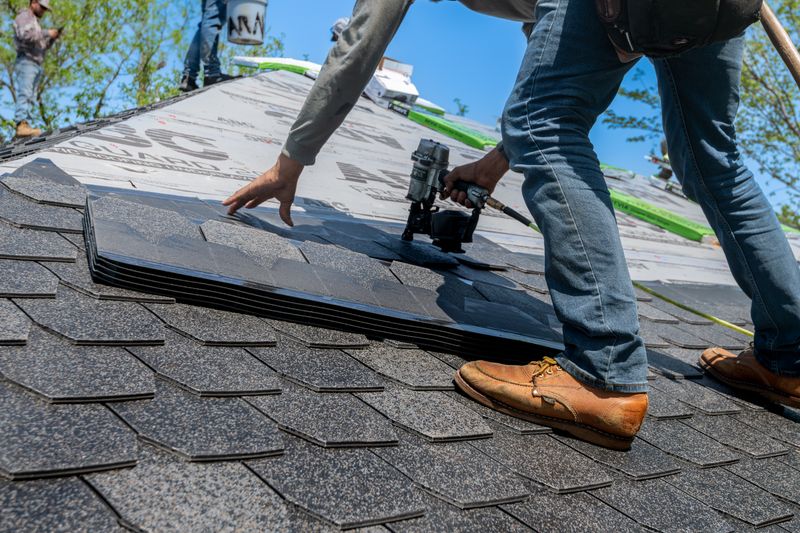
Roof Replacement in Covington
Read More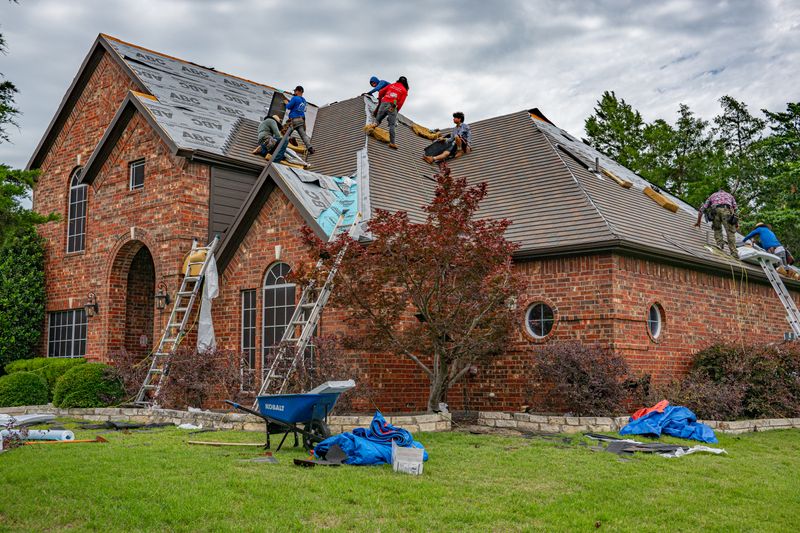
Roof Repairs in Covington
Read More
Roof Inspection in Covington
Read More
Hail Damage Roof Repair in Covington
Read More
Storm Damage Roof Repair in Covington
Read More
Storm Damage Emergency Response in Covington
Read More
Emergency Roofing in Covington
Read More
Roof Leak Detection in Covington
Read More
Roof Maintenance in Covington
Read More
Roof Coating in Covington
Read More
Roof Weatherproofing in Covington
Read More
Roof Restoration in Covington
Read More
Roof Flashing Repair in Covington
Read More
Fascia Board Installation and Repair in Covington
Read More
Gutters and Downspouts Installation in Covington
Read More
Gutters and Downspouts Repair in Covington
Read More
Siding Installation in Covington
Read More
Asbestos Roof Removal in Covington
Read More
Roof Insurance Claims in Covington
Read More
Soffit Installation in Covington
Read More
Soffit Repair in Covington
Read More
Commercial Roof Replacement in Covington
Read More
Commercial Roof Repairs in Covington
Read More
Commercial Roof Inspections in Covington
Read More
Commercial Hail Damage Repair in Covington
Read More
Commercial Re-Roofing in Covington
Read More
Commercial Roof Coating in Covington
Read More
Commercial Elastomeric Coatings in Covington
Read More
Commercial Roof Ventilation in Covington
Read More
Commercial Roof Leak Detection in Covington
Read More
Commercial Siding Installation in Covington
Read MoreCovington Roof Ventilation FAQs
The questions that come up before ventilation work in Covington, answered before you have to pick up the phone.
Topic
Question not here?
Ask us anything about your attic or roof ventilation in Covington. No charge, no obligation, and we aim to answer the same day.