
Last Updated: May 2026
Your neighbor says the dark streaks are just cosmetic. Your insurance agent says moss on the roof could affect your coverage. A gutter cleaner told you algae is eating your shingles. Everyone has an opinion, and half of them are wrong. The truth sits between the extremes. Algae does cause damage, but slowly. Moss causes damage faster and in ways that lead to leaks. And lichen, the crusty gray-green patches, sits in between. For Big Easy Roofing customers in New Orleans, understanding which organism is on your roof determines whether you need action this month or can plan for next year.
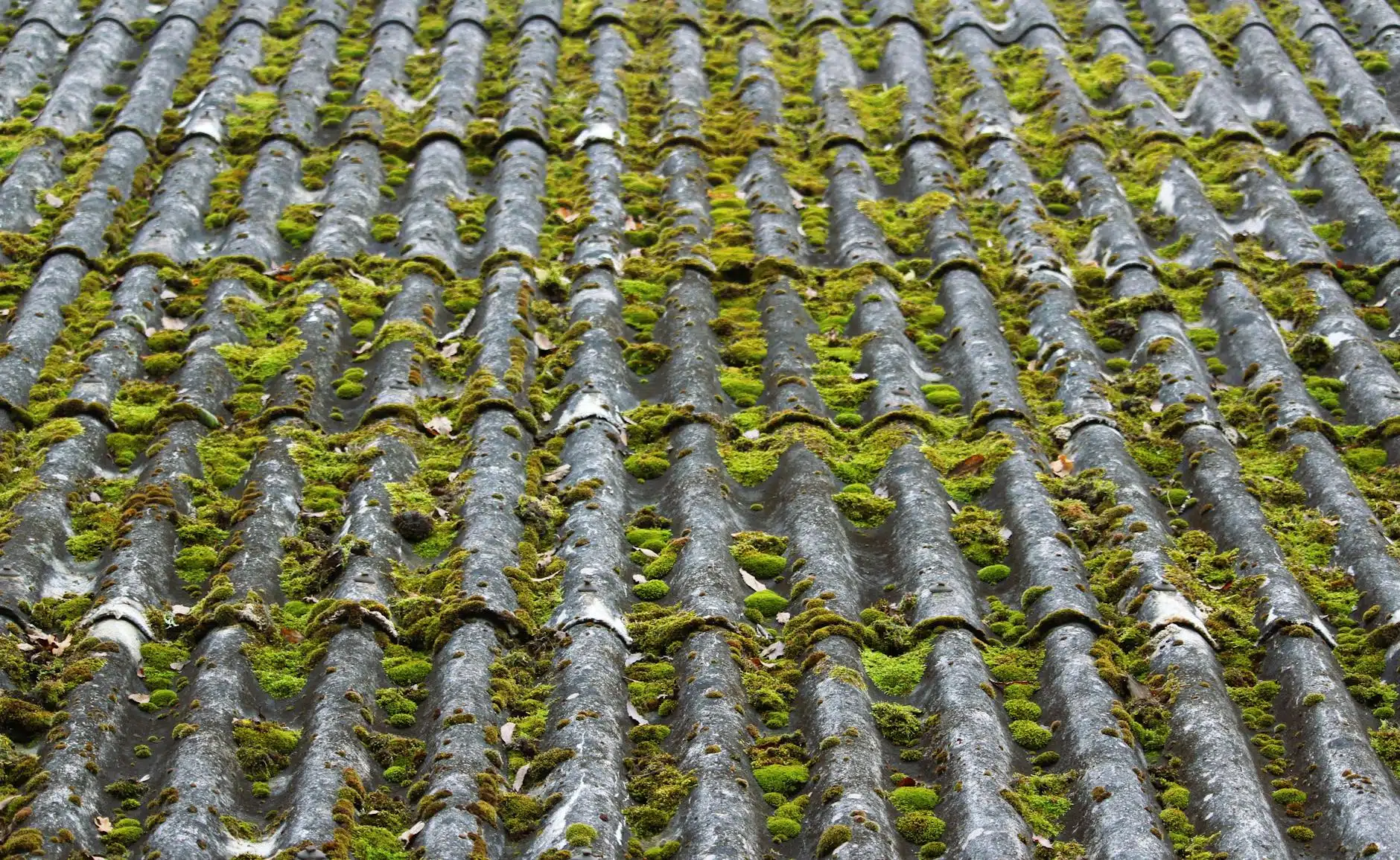
These three organisms look different, grow differently, and cause different types of damage. Treating them as interchangeable leads to either overreaction or neglect.
Algae (Gloeocapsa magma): Appears as flat, dark streaks running vertically down the roof surface. It is not raised above the shingle surface. It feels slippery when wet. It grows fastest on shaded, north-facing slopes and spreads to other roof planes over time. Algae is the most common roof growth in New Orleans, appearing on virtually every asphalt roof within 3 to 5 years.
Moss: Green, thick, and raised above the shingle surface. It looks like a dense carpet or cushion, often growing in patches between shingles, along ridges, and in valleys where debris accumulates. Moss has rootlike structures (rhizoids) that physically grip the shingle surface and penetrate between shingle layers. It grows in shaded, damp areas and is common on north-facing slopes under tree canopy in New Orleans.
Lichen: A composite organism made of algae and fungus growing together. It appears as flat, crusty patches in shades of gray, green, or yellow. Lichen adheres tightly to the shingle surface and is harder to remove than either algae or moss. It grows slowly but bonds strongly to the granule surface.
The Asphalt Roofing Manufacturers Association (ARMA) states that there is no scientific evidence that algae directly damages asphalt shingles. However, the indirect effects are measurable and, over time in Louisiana’s climate, reduce shingle performance enough to shorten roof life.
Algae colonies feed on the calcium carbonate (limestone) filler that gives modern asphalt shingles their weight and structure. As the colonies grow and spread, they loosen the bond between granules and the asphalt substrate. Granules are the protective armor on a shingle. They block UV radiation, provide fire resistance, and shed water. As granules are lost, the exposed asphalt underneath degrades faster under direct sun exposure.
The dark algae coating also absorbs more solar heat than clean granules. On a heavily streaked roof, surface temperatures can run 20 to 30 degrees higher than a clean roof of the same color. That extra heat accelerates the thermal aging process that makes shingles brittle, which compounds the granule loss problem.
Is algae an emergency? No. Is it doing nothing? Also no. On a New Orleans roof, untreated algae over 5 to 10 years can reduce effective shingle life by 5 to 10 years compared to a roof that is cleaned periodically. The removal process for roof algae in New Orleans is a soft wash that costs $300 to $600 and protects a roof investment worth $8,000 to $25,000.
Moss causes three types of direct damage that algae does not.
First, moss lifts shingle edges. The rhizoid structures grow between and beneath the leading edges of shingles, physically pushing them upward. A lifted shingle edge is a direct entry point for wind-driven rain, which travels horizontally during Louisiana storms. Once rain gets under a lifted shingle, it reaches the underlayment and, if the underlayment has aged, the roof deck.
Second, moss retains water against the shingle surface for extended periods. A thick moss patch can hold moisture for days after a rain event, even in summer heat. That sustained contact accelerates granule loss at a rate far faster than algae alone. The area beneath a moss patch shows significantly more granule thinning than an algae-only section on the same roof.
Third, moss traps debris. Leaves, twigs, and sediment accumulate in and around moss patches, creating micro-dams that redirect water flow on the roof surface. Water pooling behind a debris dam at a shingle joint can penetrate the joint and travel down the underlayment in ways that rain on a clean surface would not.
Moss in New Orleans is less common than algae because it requires more shade and cooler conditions, which limits it to heavily canopied areas and north-facing slopes. But where it grows, it demands faster action. A moss patch that has lifted shingle edges is not a cosmetic issue. It is an active leak risk.
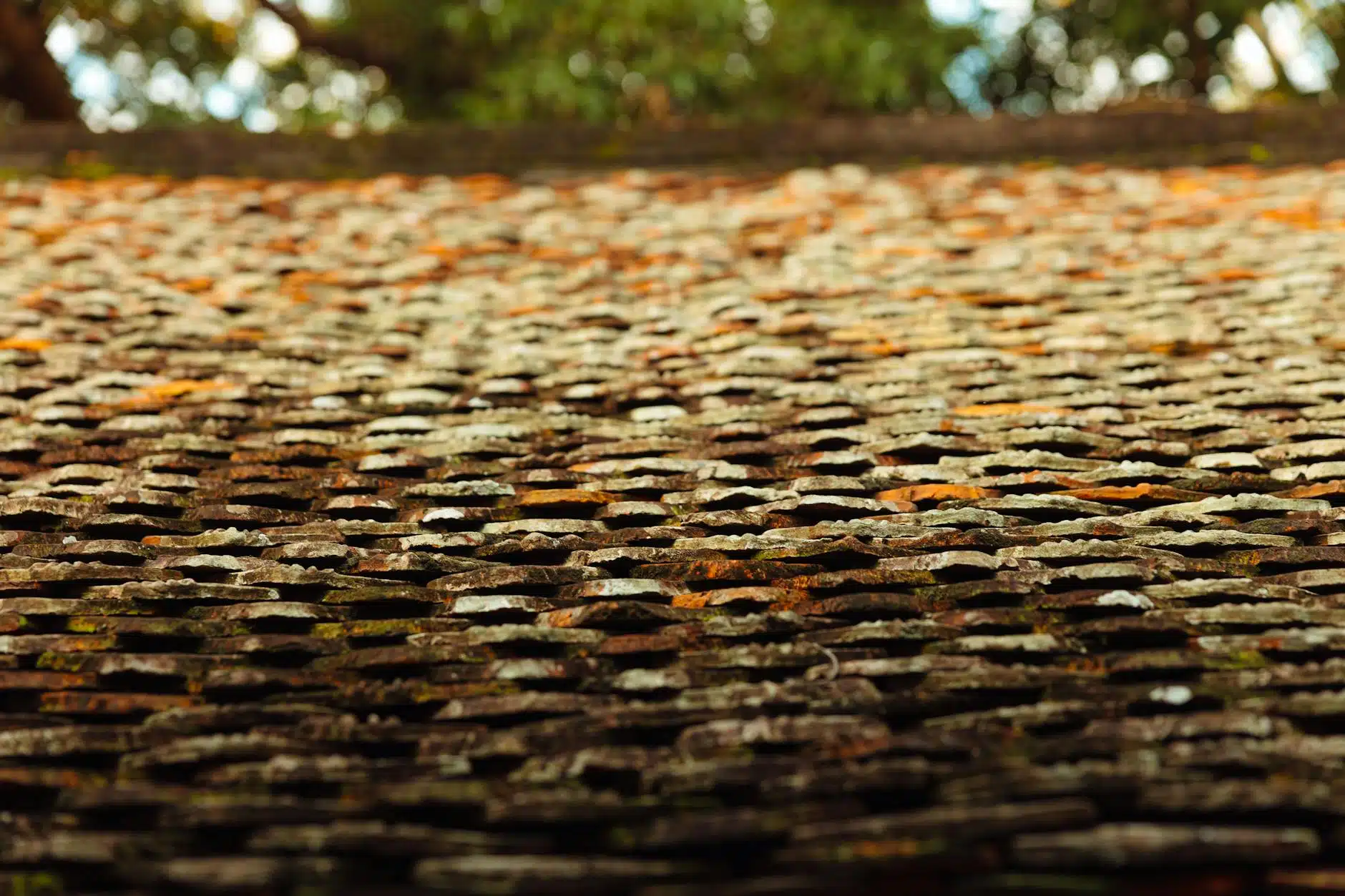
Lichen sits between algae and moss in severity. It adheres to the granule surface through a strong chemical bond that resists washing and scrubbing. When lichen is removed aggressively, it takes granules with it, leaving bare spots on the shingle.
The damage from lichen is primarily cosmetic while it is alive and attached. The risk comes during removal. Professional soft washing kills lichen, but the dead organisms remain attached and shed gradually over weeks. Attempting to scrub or pressure wash lichen off the surface causes more granule damage than leaving it in place.
In New Orleans, lichen is less common than algae but appears on older roofs with reduced granule coverage, on concrete tile, and on metal flashing. It grows slowly and does not lift shingles the way moss does. Unless lichen coverage is extensive (more than 10% of the roof surface), it falls into the maintenance category rather than the urgent repair category.
The damage from all three organisms compounds over time because each creates conditions that accelerate the next stage of deterioration.
Year 1-3: Algae streaks appear, primarily cosmetic. No measurable performance impact.
Year 3-5: Algae coverage expands to multiple roof slopes. Early granule loosening begins under the oldest colonies. Moss may appear in shaded sections if tree canopy is heavy.
Year 5-8: Granule loss under algae colonies becomes visible as lighter patches beneath the dark streaks. Moss patches that have been growing for 2+ years begin lifting shingle edges. Lichen may establish in areas of existing granule thinning.
Year 8-12: Granule coverage on affected areas drops to 50-60% of original, exposing asphalt substrate to UV. Shingle curling and brittleness accelerate in areas with combined algae and granule loss. Moss-lifted shingle edges allow water intrusion during wind-driven rain events.
A roof that could have lasted 20 to 25 years with periodic cleaning may need replacement at 15 to 17 years if growth is ignored throughout its life. On a $15,000 to $25,000 roof replacement, that lost 5 to 8 years of service represents thousands of dollars in accelerated depreciation.
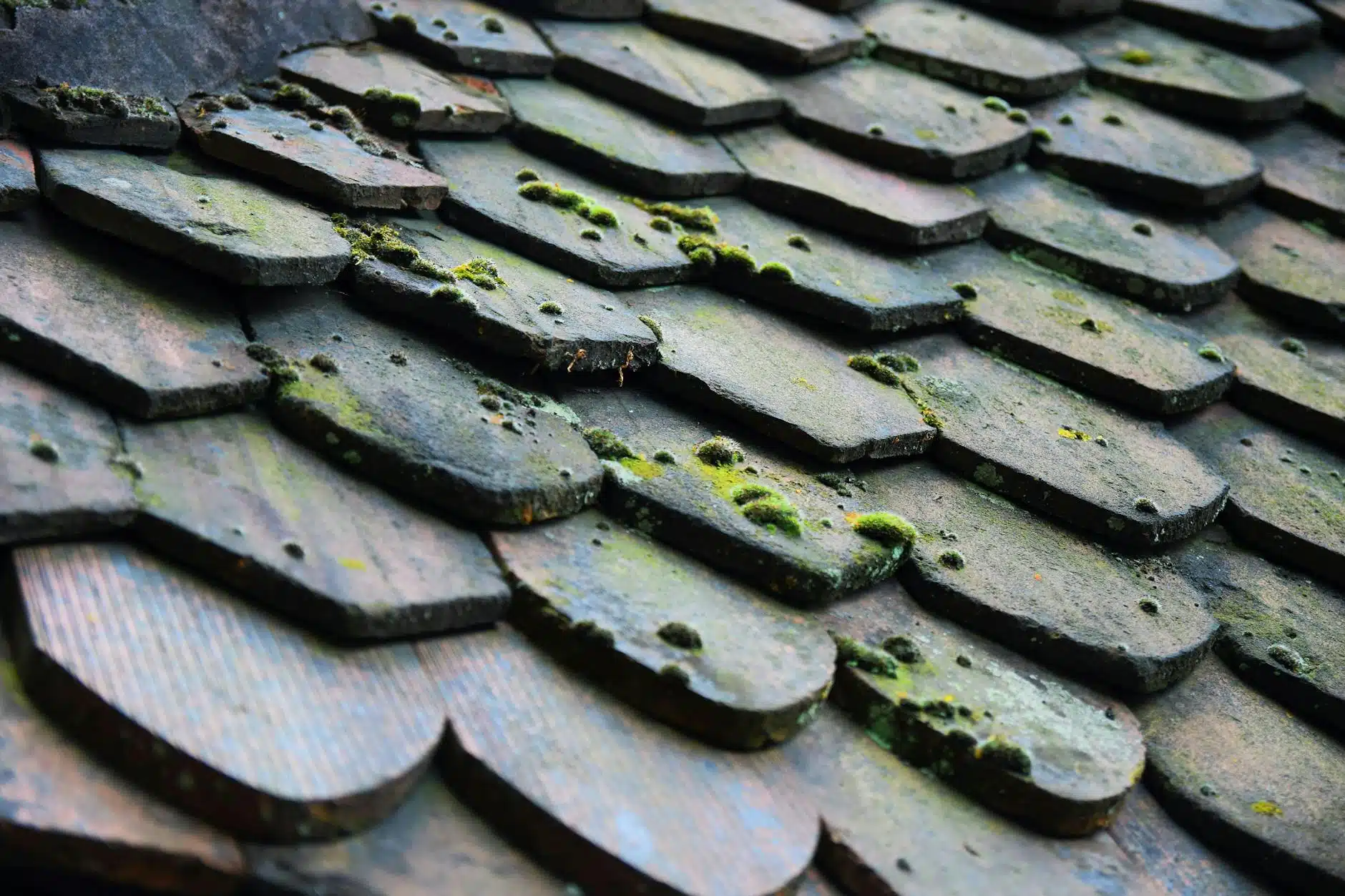
For algae: schedule cleaning when streaks become visible on more than one roof plane. This typically happens by year 3 to 5 in New Orleans. Repeat every 2 to 3 years. Install zinc strips at the ridge during your next roofing project to slow regrowth.
For moss: act within the same season you notice it. Moss that has lifted shingle edges is creating leak risk during every rain event. Professional treatment kills the moss, but the dead patches need to be gently removed to stop moisture retention. Do not attempt to scrape or pressure wash moss, as both methods damage shingles.
For lichen: treat during the next scheduled cleaning unless coverage exceeds 10% of the roof area. Lichen grows slowly enough that waiting for a convenient maintenance window is acceptable in most cases.
For all three: never pressure wash an asphalt shingle roof. ARMA specifically warns that pressure washing causes granule loss and can void your shingle warranty. Soft washing with a bleach-and-water solution at garden-hose pressure is the only approved cleaning method for asphalt shingles.
Yes. If the conditions that support moss growth persist, specifically heavy shade and moisture retention from tree canopy, new moss colonies can establish within 1 to 2 years. Trimming overhanging branches to allow more sunlight on the roof slows regrowth. Zinc or copper strips at the ridge provide additional resistance.
No. Algae presence alone does not mean the roof needs replacement. If the shingles are otherwise intact with adequate granule coverage and no curling or cracking, a professional soft wash removes the algae and restores the appearance without replacing anything.
No. Insurance classifies cleaning as routine maintenance, not a covered loss event. However, if moss-damaged shingles allow water intrusion during a covered storm, the resulting interior damage may be claimable even though the cleaning itself is not covered.
A 50/50 bleach-and-water solution applied at low pressure is the ARMA-recommended method. However, bleach runoff kills plants and grass below the roof edge. Professional soft wash crews wet and protect landscaping before and after application. If you attempt it yourself, thoroughly pre-wet all plants within 10 feet of the drip line and rinse them immediately after the roof treatment.
AR shingles contain copper granules that inhibit algae colonization. They have minimal effect on moss, which is a different type of organism with a different growth mechanism. Heavy shade and moisture control are the primary defenses against moss, not shingle chemistry.
Algae is flat and dark with no texture. Moss is raised, green, and feels spongy. Lichen is flat but crusty, usually gray-green or yellowish, and feels hard when touched. All three can appear on the same roof in different locations, and each may require a different treatment intensity.
Do you know the difference between a gable roof and a gambrel roof? How about...
Read More
When selecting a roofing material for your home, there are numerous factors t...
Read More Attic ventilation is not something most New Orleans homeowners think about un...
Read More Are you wondering what the difference is between roof repair and roof replace...
Read More Failing gutters cause roof damage in ways most homeowners never connect to t...
Read More A seemingly small mistake in nailing can lead to significant damage and costl...
Read More 



 By Big Easy Roofing
  Jun 24, 2026