
Last Updated: May 2026
Most homeowners know they have a roof warranty. Fewer know what it actually covers. Even fewer know what voids it. When a shingle fails at year 12 on a roof with a “30-year warranty,” the homeowner expects coverage. What they often get is a prorated material credit worth a fraction of the replacement cost, a denied workmanship claim because the contractor who installed it is no longer in business, or a voided warranty because the attic ventilation never met code. Understanding what each warranty actually promises, and what it requires from you, prevents the kind of surprise that turns a covered repair into an out-of-pocket replacement. Big Easy Roofing walks every New Orleans customer through warranty terms before installation begins.

Because two different parties are responsible for two different things. The shingle manufacturer made the material. The roofing contractor installed it. Each stands behind their own contribution. A defective shingle that cracks despite correct installation is the manufacturer’s problem. A properly manufactured shingle that leaks because the contractor nailed it wrong is the contractor’s problem. When a roof fails, the first question is always: did the material fail, or did the installation fail?
This separation matters because filing a claim with the wrong party wastes time and gets denied. If your roof leaks at a flashing joint, that is almost always a workmanship issue, not a material defect. If shingles are cracking across their faces in a pattern across the entire roof, that points to a manufacturing defect. Knowing which warranty covers which failure type is the first step in getting a legitimate claim resolved.
The manufacturer warranty covers defects in the roofing materials when those materials were installed according to the manufacturer’s specifications. Covered defects typically include premature granule loss beyond normal weathering, cracking or splitting that is not caused by impact or foot traffic, manufacturing inconsistencies in shingle thickness or composition, and delamination of architectural shingle layers due to adhesive defects.
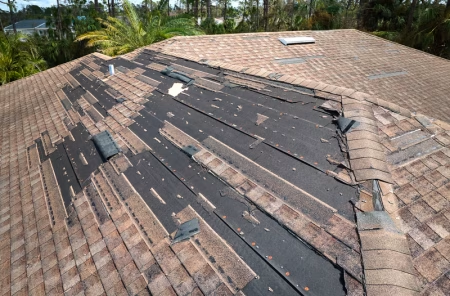
What the manufacturer warranty does not cover: storm damage, foot traffic damage, damage from improper installation, damage from inadequate ventilation, damage from pressure washing, normal weathering and aging, and algae or moss growth. These exclusions eliminate the majority of roof failures homeowners experience in Louisiana.
Most manufacturer warranties run 25 to 50 years on paper. The first 10 years are typically non-prorated, meaning the manufacturer covers full material replacement cost. After year 10, coverage becomes prorated, declining each year. By year 20, a prorated warranty on a $5,000 material bill might cover $1,500 to $2,000. By year 25, coverage may be $500 or less. The warranty term is not the same as the coverage level.
The workmanship warranty comes from your roofing contractor and covers installation errors. This includes leaks caused by improperly sealed flashing, nail placement that does not meet manufacturer specifications, starter strip and drip edge installation failures, improper valley or hip/ridge installation, and underlayment gaps or overlaps that allow water intrusion.
Workmanship warranties vary from contractor to contractor. Some offer 2 years. Some offer 10. A few offer lifetime workmanship coverage. The length and terms depend entirely on the contractor, and unlike manufacturer warranties, there is no industry standard.
The critical question with a workmanship warranty is: will this contractor still be in business when I need to file a claim? A 10-year workmanship warranty from a contractor who closes after 3 years is worth nothing. In Louisiana, where storm seasons bring an influx of temporary roofing operations, this risk is real. A contractor who has been operating in the New Orleans roofing market for years with a verified track record is a safer warranty bet than one that arrived after the last hurricane.

These are the most common warranty-voiding conditions that Louisiana homeowners encounter:
Improper attic ventilation. Every major manufacturer requires adequate intake and exhaust ventilation as a condition of warranty coverage. If the attic does not meet the required ventilation ratio (typically 1 square foot of net free ventilation area per 150 square feet of attic floor), the manufacturer can deny a material warranty claim. Insufficient ventilation causes heat buildup that accelerates shingle aging, and manufacturers hold the homeowner responsible for maintaining the ventilation the installer should have verified at installation.
Installation by an uncertified contractor. Premium warranty programs from GAF (Golden Pledge, Silver Pledge), CertainTeed (SureStart Plus), and Owens Corning (Platinum Protection) require installation by a contractor certified under that manufacturer’s program. If an uncertified contractor installs the shingles, only the standard limited warranty applies, which is significantly less coverage.
Layering over existing shingles. Many manufacturers void the warranty if new shingles are installed over an existing layer instead of tearing off the old roof first. Layering traps moisture between the layers and prevents inspection of the deck condition. Some contractors offer layering as a cost-saving measure, but the warranty sacrifice can cost more in the long run.
Failure to document maintenance. Manufacturer warranties increasingly include language requiring the homeowner to maintain the roof and keep records. If you file a claim and cannot show evidence of periodic inspections, gutter maintenance, or algae treatment, the manufacturer may argue that the failure resulted from neglect rather than a material defect.
Unauthorized repairs or modifications. If someone other than the original installer or a similarly certified contractor makes repairs or modifications to the roof, the warranty can be voided. This includes satellite dish installations that penetrate the membrane, solar panel mounting, and even well-intentioned DIY repairs.
Prorated means the warranty pays less each year you own the roof. A typical proration schedule works like this:
These numbers vary by manufacturer and warranty tier, but the pattern is consistent. A “30-year warranty” does not mean 30 years of full coverage. It means 30 years of decreasing coverage. At the point where most Louisiana roofs actually need replacement (year 15-20), the warranty may cover only half or less of the material cost, and labor is excluded entirely from most manufacturer warranties.
Enhanced warranty programs (GAF Golden Pledge, CertainTeed SureStart Plus) extend the non-prorated period and sometimes include labor coverage during the non-prorated window. These premium warranties are available only through certified contractors and cost more at installation, but they provide substantially better coverage during the years when claims are most likely.
For Louisiana homes specifically, prioritize these warranty features:
Get the warranty terms in writing before the project starts, not after. Read the exclusions section, not just the coverage highlights. And keep a file with your warranty documents, installation contract, and dated photos of any maintenance or inspections you perform.
Most manufacturer warranties are transferable to a new owner one time, within 60 days of the sale, with a transfer fee ranging from $50 to $250. Workmanship warranties may or may not transfer depending on the contractor’s terms. Transferable warranties add value to a home sale in New Orleans.
Standard manufacturer warranties cover wind damage up to the rated speed, typically 60 to 130 mph depending on the product line and installation method. Damage from winds exceeding the rated speed is excluded. Damage from falling debris, flooding, and storm surge is also excluded from roofing warranties and falls under homeowners insurance.
In most cases, yes. A workmanship warranty is only as reliable as the contractor behind it. If the company dissolves, the warranty has no party to enforce it against. This is why contractor longevity and reputation should factor heavily into your hiring decision.
Excessive foot traffic can cause damage that the manufacturer will attribute to misuse rather than a material defect. Occasional access for maintenance is expected and should not void coverage. Installing satellite dishes, solar panels, or other equipment that penetrates the roof surface can void the warranty if not done by an authorized installer.
Contact the manufacturer directly through their warranty claims department. You will need your original purchase documentation, photos of the defective material, and a professional assessment from a licensed roofer confirming the failure is a material defect rather than an installation or maintenance issue.
A “lifetime” warranty covers the material for as long as the original purchaser owns the home. It does not mean unlimited coverage. Lifetime warranties are heavily prorated after the initial non-prorated period and typically exclude labor, which is often the larger cost in a roof repair or replacement.
A wind mitigation inspection documents the structural features of your home ...
Read More
Your roof is one of the most important parts of your home, so it's important ...
Read More When it comes to your home, the roof is one of the most important components....
Read More Every time a storm rolls through New Orleans, homeowners face the same questi...
Read More When it comes to selecting the right siding installation contractor, making a...
Read More Signs of a Roof Leak When it comes to maintaining the integrity of your home...
Read More 



 By Big Easy Roofing
  Jun 18, 2026