
Last Updated: May 2026
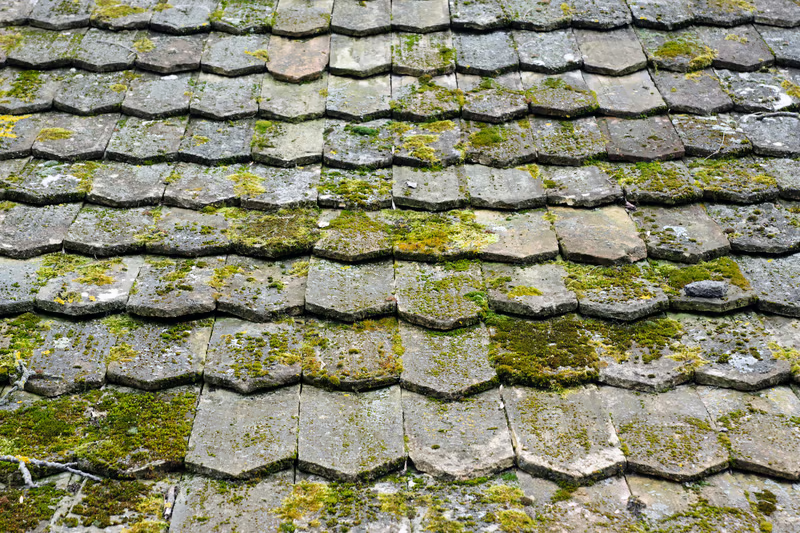
You noticed the streaks a year ago. Maybe two. They started near the gutters on the north-facing slope, then spread. The roof looks dirty, aged, like it belongs on a house 20 years older than yours. Your neighbors have them too. You probably assumed it was pollution, dirt, or just the way roofs look in New Orleans after a few years. It is none of those things. Those streaks are alive, and they are doing real damage to your shingles every month you ignore them. Big Easy Roofing sees this on nearly every inspection call in the metro area, and the fix is straightforward once you know what you are dealing with.
Please note: The prices in this article are estimates only, shared to help you plan. Your actual cost depends on your property, the materials and the size of the job. For pricing on your project, call Big Easy Roofing at (504) 800-8196 for a quote.
The culprit is Gloeocapsa magma, a type of cyanobacterium (blue-green algae) that has spread across the southeastern United States over the past 30 years. It is not mold. It is not moss. It is a photosynthetic organism that feeds specifically on the calcium carbonate (limestone) filler used in modern asphalt shingles.
Shingle manufacturers switched from heavier, more expensive inorganic fillers to limestone because it is abundant and cheap. That switch gave Gloeocapsa magma a food source on every asphalt roof in warm, humid climates. The black color comes from the dark protective sheath the organism produces to shield itself from UV radiation. The darker the streak, the thicker and more established the colony.
The streaks always start on the shaded, north-facing, or east-facing slopes first because those surfaces retain moisture longer and get less direct sun. On a New Orleans home, the roof may look clean on the south face and heavily streaked on the north face for years before the colonies spread to every slope.
New Orleans checks every box for aggressive algae growth. Annual rainfall exceeds 60 inches. Summer humidity regularly holds above 80%. Average summer temperatures stay in the 90s, which is the ideal growth range for Gloeocapsa magma. Tree canopy cover from live oaks and magnolias blocks sunlight and traps moisture on the roof surface longer after rain.
Proximity to other infected roofs accelerates spread. The algae reproduce through spores that travel on wind and rain splash. In dense New Orleans neighborhoods like Mid-City, Gentilly, Lakeview, and Algiers, once one roof develops colonies, every neighboring roof is exposed within a year. There is no realistic way to prevent initial exposure in this climate. The question is how you manage it once it arrives.
Yes. Many homeowners treat this as a cosmetic problem. It is not. Gloeocapsa magma causes two types of real damage that shorten your roof’s working life.
First, the algae feed on limestone filler in the shingle. As colonies grow, they loosen the surface granules that protect the asphalt layer underneath from UV radiation. Granule loss exposes the asphalt to direct sun, which causes the shingle to dry out, crack, and curl years ahead of schedule. Check your gutters for excessive granule buildup. If the gutter bottom is coated with fine grit that looks like coarse sand, your shingles are shedding granules faster than normal.
Second, the dark algae coating absorbs more heat than clean shingles. A heavily streaked roof can run 20 to 30 degrees hotter on the surface than a clean one. That extra heat bakes the shingles from above while the sun bakes them from below, accelerating the chemical breakdown of the asphalt binder.
The Asphalt Roofing Manufacturers Association (ARMA) acknowledges that algae growth on shingles can affect appearance and, over time, the performance of the roofing system. Left untreated for 5 to 10 years, algae-infected shingles can lose enough granule coverage to require replacement years before the manufacturer warranty period expires. On a New Orleans home, that could mean the difference between a roof lasting 20 years versus 12 to 15.

Soft washing applies a low-pressure cleaning solution, typically a 50/50 mix of sodium hypochlorite (bleach) and water, to the roof surface and lets it dwell for 15 to 20 minutes before rinsing with low-pressure water. The solution kills the algae colonies on contact. The dead organic material washes away with rain over the following weeks.
The critical word is low-pressure. Never use a pressure washer on an asphalt shingle roof. The Asphalt Roofing Manufacturers Association explicitly warns that pressure washing causes granule loss and can void your shingle warranty. A soft wash system operates at roughly the same pressure as a garden hose. The chemical does the work, not the water pressure.
Professional soft wash crews also protect landscaping below the roof by wetting plants and covering sensitive vegetation before applying the solution, then rinsing the perimeter after the job. Sodium hypochlorite can damage or kill plants if it reaches the root zone undiluted.
A properly executed soft wash removes the visible streaks within the first treatment and kills the root structure that would otherwise regrow. Most roofs stay clean for 2 to 3 years before a maintenance wash is needed, depending on shade coverage and proximity to infected neighboring roofs.
Professional soft washing for a single-story New Orleans home costs $300 to $600. Two-story homes and larger roofs run $450 to $750, depending on roof pitch, accessibility, and the severity of the algae growth. The job takes 2 to 4 hours for most residential properties.
Compare that to the cost of the damage it prevents. A full asphalt shingle roof replacement on a typical New Orleans home runs $8,000 to $25,000 depending on size, pitch, and material grade. If a $400 soft wash every 2 to 3 years extends your roof life by 5 to 10 years, the math is not even close. The cleaning pays for itself dozens of times over.
Some homeowners attempt DIY cleaning with store-bought algae wash products. These work on light surface staining but rarely penetrate established colonies. If the streaks have been visible for more than a year, a professional treatment with proper concentration and dwell time will deliver a significantly better result. Climbing a wet, algae-slicked roof with a garden sprayer is also a serious fall risk for anyone without proper equipment.
Complete prevention is not realistic in New Orleans’s climate. You can slow regrowth and extend the interval between cleanings.
Zinc or copper strips installed along the roof ridge release trace amounts of metal ions when rain washes over them. These ions inhibit algae growth on the shingle surface below. A single row of zinc strip across the ridge costs $200 to $500 installed and can double the time between cleanings. You may have noticed that roofs near galvanized metal flashing or copper chimneys stay cleaner in the area directly below the metal. That is the same principle at work.
Algae-resistant shingles are another option when it is time to choose roofing materials that hold up in New Orleans. Manufacturers blend copper granules into the shingle surface to inhibit algae growth. Most major brands now offer AR (algae-resistant) shingles at a modest premium over standard lines. They do not prevent algae entirely, but they slow colonization enough that a roof can stay visually clean for 8 to 12 years in Gulf Coast conditions versus 3 to 5 years with standard shingles.
Trimming tree branches that overhang the roof reduces shade and allows the surface to dry faster after rain. You do not need to remove every tree, but keeping branches 6 to 10 feet away from the roof surface makes a measurable difference in drying time and algae growth rate.
Gloeocapsa magma on your roof surface poses no direct health risk to people inside the home. It does not produce airborne toxins at levels that affect indoor air quality. The concern is structural, not medical. The algae damage your shingles over time, not your respiratory system.
No. Pressure washing strips granules from asphalt shingles and can void your warranty. The Asphalt Roofing Manufacturers Association specifically warns against pressure washing. Use a soft wash with a bleach-and-water solution applied at low pressure.
Standard homeowners policies do not cover roof cleaning or algae removal because it is classified as maintenance, not damage from a covered event. However, if algae-accelerated deterioration leads to a leak or failure during a covered storm, the resulting damage may be claimable.
Algae appears as flat dark streaks running vertically down the roof. Moss is green, raised, and fuzzy, growing in thick patches usually on shaded sections. Mold appears as irregular dark splotches and is more common in attics or under shingles than on the exposed surface. Each requires a different treatment approach.
They slow colonization but do not stop it entirely. In New Orleans humidity, AR shingles typically stay clean for 8 to 12 years versus 3 to 5 years for standard shingles. They cost 10% to 15% more than standard options and are worth the premium for a new roof installation in this climate.
Every 2 to 3 years for most homes. Roofs with heavy shade from live oaks or magnolias may need cleaning every 18 to 24 months. Roofs with zinc strips installed at the ridge can often go 4 to 5 years between cleanings.
Yes. Algae-streaked roofs make homes appear older and poorly maintained to buyers, and home inspectors flag heavy algae growth in their reports. A pre-listing soft wash is one of the highest ROI curb appeal improvements a New Orleans seller can make.
Summary: Siding is a New Orleans home’s first defense against hurrica...
Read More
Your roof has to deal with a lot in New Orleans. Between hurricane-force wind...
Read More Your roof is one of the most important parts of your home, so it's important ...
Read More Installing a flat roof is an important and expensive process that requires kn...
Read More Summary: New Orleans homeowners planning a siding installation must account...
Read More It's no secret: One of the most important components of a well-constructed ho...
Read More 



 By Big Easy Roofing
  May 21, 2026