
Last Updated: May 2026
Louisiana homeowners insurance premiums rank among the highest in the country, and the wind/hail portion of the policy is where most of that cost sits. What many homeowners do not realize is that their home may already have features that qualify for steep discounts, but the insurer will not apply those credits until an inspector documents them on the state-approved survey form. That is what a wind mitigation inspection does. It is not a repair. It is not a sales pitch. It is a documentation exercise that turns your home’s existing construction into real money saved on premiums. Big Easy Roofing has helped New Orleans homeowners through this process and has seen savings that justified the inspection cost many times over.

A wind mitigation inspection evaluates your home’s ability to withstand hurricane-force winds and documents those features on a standardized form that your insurance company uses to calculate premium discounts. The Louisiana Department of Insurance mandated these credits starting January 1, 2009. Every insurer writing homeowners policies in Louisiana must offer them, but the homeowner has to request the inspection and submit the completed form.
The inspection is separate from a standard home inspection or a roof inspection. It focuses on specific construction details that reduce wind damage: how the roof connects to the walls, what shape the roof is, whether secondary water barriers exist, and whether windows and doors have impact-rated protection. Your home does not need to pass or fail. The inspector documents what exists, and your insurer applies the applicable credits.
The survey form covers five categories, and each one carries its own discount. Your home does not need to score well in all five. Even one qualifying feature can reduce your premium.
Roof-to-wall connections: This is the most impactful category. The inspector climbs into your attic and checks how your roof trusses or rafters connect to the top of the exterior walls. Toe nails (the weakest connection) earn no credit. Hurricane clips earn a moderate discount. Hurricane straps that wrap around the truss and bolt to the wall earn the highest credit. Homes built or reroofed after 2004 in Louisiana often have clips or straps because building codes changed after the 2004-2005 hurricane seasons.
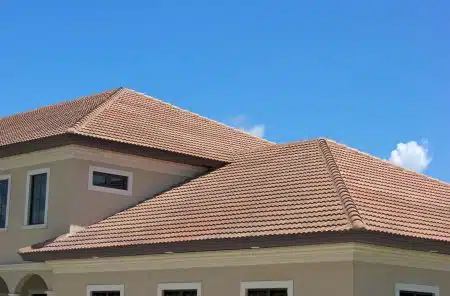
Roof geometry: Hip roofs, where all four sides slope downward, perform better in wind than gable roofs because they deflect wind pressure rather than catching it like a sail. A fully hip roof earns the maximum credit. A combination of hip and gable sections earns partial credit. This is a fixed structural feature, so you either have it or you do not.
Secondary water barrier: This is a layer of protection between the shingles and the roof deck that prevents water intrusion if shingles blow off. Self-adhering bitumen tape over deck joints, spray-applied closed-cell foam at deck joints, or full-deck self-adhering membrane sheets all qualify. Many homes reroofed to FORTIFIED standards in Louisiana have this feature.
Roof deck attachment: The inspector checks how the plywood or OSB decking is fastened to the trusses. 8d nails at 6-inch spacing earn more credit than standard 6d nails at 12-inch spacing. Screws earn the highest rating. This feature is set during construction or reroofing.
Opening protection: Windows, doors, skylights, and garage doors rated for impact resistance or protected by code-approved hurricane shutters qualify for this credit. Both permanent shutters and removable panel systems count if they meet Florida Building Code or Miami-Dade County standards, which Louisiana accepts as equivalent.
Savings range from a few hundred dollars to several thousand per year depending on which features your home has and the size of your wind/hail premium. Southeast Louisiana homeowners have documented savings of up to 65% on the wind and hail portion of their policies, according to the Louisiana Department of Insurance.
A real example from a New Orleans homeowner reported by WWL-TV: a wind mitigation inspection lowered their annual premium from $5,000 to $4,000, saving $1,000 per year. Another homeowner saved over $4,000 annually after the inspection documented features they did not know qualified for credits.
One important detail: the discount percentages typically apply to the wind/hail portion of the premium, not the total policy. Your insurer or agent can clarify which portion the credits reduce. Even so, since wind/hail is the largest line item on a Louisiana homeowners policy, a 15% to 65% reduction on that portion translates to real money.
The inspection report is valid until you make structural changes to the home. You do not need to repeat it annually. One inspection, one form, ongoing savings for as long as the features exist and the policy is active.

A wind mitigation inspection in the New Orleans area costs between $75 and $200 depending on the inspector, home size, and whether it is bundled with another service like a standard home inspection or roof inspection. Most inspections take 30 to 60 minutes. The cost is paid once and the report is valid indefinitely until the home is modified.
At $100 to $150 for most homes, the inspection pays for itself within the first policy cycle if even a single qualifying feature is documented. If your roof was replaced after 2004 and hurricane clips were installed per code, the roof-to-wall connection credit alone typically exceeds the inspection cost in the first year.
Louisiana requires the wind mitigation survey form to be completed and certified by one of the following: a registered Wind Mitigation Surveyor, a licensed architect, a licensed professional engineer, or a Code Enforcement Officer registered with the Louisiana State Uniform Construction Code Council (LSUCCC).
General contractors and standard home inspectors cannot sign the form unless they hold one of these specific registrations. When scheduling your inspection, verify the inspector’s credentials through the LSUCCC registry before paying. An unsigned or improperly certified form will be rejected by your insurer.
Licensed roofing contractors who also hold wind mitigation surveyor registration can perform the inspection during a scheduled roof assessment, which saves a separate appointment. Ask your roofer whether they carry the surveyor credential when you schedule your next professional roof inspection in New Orleans.
The inspector visits your home and checks each of the five categories in person. For roof-to-wall connections, they need attic access to visually confirm the type of hardware at the truss-to-wall joint. For roof geometry, they observe the roofline from outside. For secondary water barrier and deck attachment, they may review building permits, original construction documents, or photos from the last reroofing project if the features are not directly visible.
Opening protection requires the inspector to check each window and door for impact rating labels, check the garage door for wind rating, and verify any shutter systems meet code standards. They photograph everything and complete the state-approved survey form.
You receive a copy of the completed form, which you submit to your insurance company or agent. Most insurers apply the credits starting at your next renewal. Some will adjust mid-term if you request it.
Yes, and some upgrades cost less than you might expect. The two most practical retrofits for existing homes are roof-to-wall connections and opening protection.
Adding hurricane clips or straps to an existing roof is possible when the attic is accessible. A licensed contractor installs metal connectors at each truss-to-wall joint. For a typical 1,500-square-foot home, this runs $1,500 to $3,000 depending on how many trusses need hardware and how accessible the connections are. Given that this upgrade can save $500 to $2,000 per year on insurance, the payback period is often under two years.
Impact-rated shutters for windows and doors range from $15 per square foot for removable panels to $50 or more per square foot for roll-down systems. A full-house shutter installation can run $3,000 to $15,000 depending on the number and size of openings. The insurance savings from the opening protection credit help offset this cost over time.
If you are already planning a roof replacement, adding a secondary water barrier during the reroofing process costs only $500 to $1,500 more than a standard installation. Since the deck is already exposed, the labor is minimal. This is the cheapest time to add this feature. Talk to your contractor about building hurricane resistance into your next roof replacement while the deck is accessible.
Yes. Since January 1, 2009, the Louisiana Department of Insurance has required all insurers writing homeowners policies in the state to offer wind mitigation credits based on documented home features. The discount percentages vary by insurer, but the requirement to offer them is universal.
The report remains valid until you make structural changes to the home that affect the inspected features. You do not need to repeat the inspection annually. If you replace your roof, add shutters, or modify roof-to-wall connections, a new inspection documents the updated features for additional credits.
Yes. Older homes can still have qualifying features. Some pre-2004 homes have hip roofs, adequate deck attachment, or hurricane clips that were added during a past reroofing project. The inspection documents whatever exists regardless of the home’s age.
No. A wind mitigation inspection is a documentation survey for insurance credits. A FORTIFIED evaluation follows the IBHS (Insurance Institute for Business and Home Safety) FORTIFIED Home standard, which is a more rigorous set of construction requirements. A FORTIFIED-designated home will score well on a wind mitigation inspection, but the two are separate processes with different certifications.
For individually owned units, the inspection typically applies to the building structure, which the HOA or condo association controls. If you own the entire structure (townhouse with individual roof), you can get the inspection. For multi-unit condos, the association would need to arrange the inspection for the building.
Then the inspection costs you the inspection fee and you receive no discount. This is uncommon for homes built or reroofed after 2004, since building code changes in Louisiana require hurricane clips at minimum. For older homes with no qualifying features, the inspector can identify the most cost-effective upgrade to pursue.
No. Wind mitigation credits apply to the wind/hail portion of your homeowners policy only. Flood insurance through NFIP or private carriers uses separate rating criteria based on flood zone, elevation, and building characteristics. The two are distinct policies with different discount structures.
Filing a roof insurance claim in Louisiana isn’t the same as filing one...
Read More
When you think of fire, the first thing that comes to mind is destruction and...
Read More A new roof in New Orleans doesn’t get the same lifespan as one in, say,...
Read More For most New Orleans commercial buildings, TPO is the stronger choice in 202...
Read More The first 48 hours after hurricane roof damage determine how much you recove...
Read More How to prevent gutters from clogging? Keep your gutters clean - This is an ob...
Read More 



 By Big Easy Roofing
  May 19, 2026