
New Orleans Roof Inspection Checklist | Big Easy Roofing FREE Roofing Estimates
24 Hour Roof Replacement Guarantee
Call Icon Top

Call Our Roofing Experts! (504) 800-8196

Image
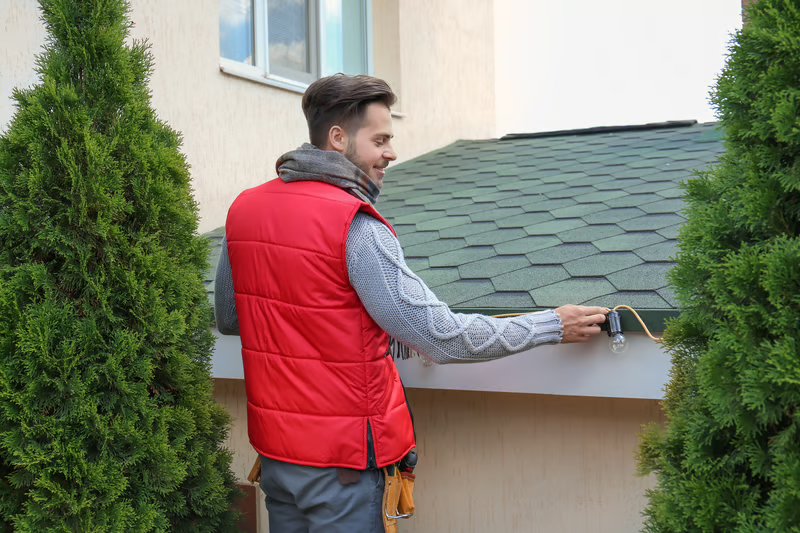
Licensed roofer inspecting shingle condition on a New Orleans residential roof before hurricane season

What Should Be on Your New Orleans Roof Inspection Checklist Before and After Storm Season?

What Should Be on Your New Orleans Roof Inspection Checklist Before and After Storm Season?

New Orleans homeowners should inspect their roof twice a year, once in spring before hurricane season begins June 1 and again in fall after the season ends November 30. A proper inspection covers shingles, flashing, pipe boots, gutters, soffit vents, and attic conditions from the inside. Catching a cracked pipe boot or lifted shingle before a storm costs a fraction of the water damage repair bill that follows a missed warning sign. Big Easy Roofing recommends professional inspections annually, with homeowner ground-level checks between visits.

Last Updated: May 2026

New Orleans averages over 60 inches of rainfall per year. Add hurricane-force winds, 90-degree summer heat that bakes shingles, and humidity that feeds mold and algae growth, and your roof absorbs more punishment than roofs in most American cities. A checklist keeps you from forgetting the small things that turn into expensive problems. This is not a generic list pulled from a national template. Every item below reflects conditions specific to southeastern Louisiana, where Big Easy Roofing inspects roofs across Orleans, Jefferson, and St. Tammany parishes year-round.

Table of Contents

How Often Should New Orleans Homeowners Inspect Their Roof?

Twice a year at minimum: once in April or May before hurricane season opens June 1, and once in late November or December after the season closes. These two inspections catch problems created by summer heat and storm damage before they compound through the next weather cycle. A spring inspection gives you time to schedule repairs before contractors get buried in storm season work.

If a named storm passes within 50 miles of your home, inspect again within 48 hours regardless of the calendar. Wind-driven rain can push water through gaps that held fine during normal rainfall. The post-storm inspection focuses on different things than the seasonal check, and both matter.

Close-up of cracked rubber pipe boot on a New Orleans roof showing signs of dry rot and potential leak

What Should You Look for on Your Shingles?

From ground level with binoculars, scan each roof plane for these specific conditions. You do not need to climb the roof for most of this.

Spring Pre-Season Check:

  • Missing shingles or gaps in the shingle pattern, especially along ridges and hip lines where wind catches first
  • Curling at the edges or corners, which means the shingle has lost flexibility and will lift in high winds
  • Blistering or bubbling surfaces caused by trapped moisture from the previous summer’s heat
  • Dark streaks or staining from algae growth (Gloeocapsa magma thrives in New Orleans humidity)
  • Granule accumulation in gutters or at downspout discharge points, a sign of advanced shingle wear

Post-Season Fall Check:

  • Shingles that shifted position during storms but did not fully detach
  • Nail pops where fasteners worked loose under thermal cycling and wind stress
  • Cracked shingles from impact by small debris that was not visible from the ground during or after the storm
  • Moss or lichen growth that established during the wet summer months

If your shingles are over 15 years old in the New Orleans climate, they are approaching the end of their effective lifespan regardless of what the manufacturer warranty says. National warranty estimates assume milder conditions than what a Gulf Coast roof endures.

How Do You Check Roof Flashing for Problems?

Flashing seals the joints where the roof plane meets a vertical surface: chimneys, dormers, sidewalls, skylights, and vent pipes. In New Orleans, thermal expansion from extreme summer heat followed by cooling rain causes flashing to work loose faster than in moderate climates. A gap of 1/16 of an inch is enough for wind-driven rain to enter.

Look for these from the ground or attic side:

  • Visible rust on galvanized steel flashing, which means the protective coating has failed
  • Gaps between flashing and the adjoining surface where caulk has cracked or pulled away
  • Bent or lifted flashing edges along chimneys, especially on the uphill side where water pools
  • Step flashing along sidewalls that has slid out of position, exposing the joint underneath

Chimney flashing failures are the single most common source of roof leaks on homes in older New Orleans neighborhoods like Lakeview, Gentilly, and Broadmoor. Many of these homes were reroofed after Katrina, but the flashing was reused or improperly sealed. If your roof is leaking and you cannot find the source, start with the flashing around vertical penetrations.

Are Your Gutters and Drainage Working Correctly?

New Orleans gets more annual rainfall than Seattle, Houston, or Miami. Gutters that work “well enough” in other cities fail here. Clogged or undersized gutters overflow during heavy rain, sending water behind the fascia board and into the soffit, where it rots the wood framing and can migrate to the roof deck.

Check these items:

  • Debris accumulation from live oak leaves, pine needles, and Spanish moss, which clog more aggressively than deciduous leaf litter
  • Gutter slope: water should flow toward downspouts with no standing pools. If you see standing water 30 minutes after rain stops, the slope is wrong.
  • Downspout discharge: water should exit at least 4 feet from the foundation. Extensions or splash blocks that shifted during storms need repositioning.
  • Gutter hangers and brackets for looseness. Heavy rain loads pull gutters away from the fascia over time.
  • Rust or corrosion holes in aluminum or galvanized gutters

Gutter screens help but are not a substitute for cleaning. Spanish moss and fine oak debris pass through most screen types and accumulate underneath. Plan for at least two gutter cleanings per year in addition to the inspections.

What Condition Are Your Pipe Boots and Roof Vents In?

Pipe boots are the rubber or neoprene collars that seal around plumbing vent pipes where they exit the roof. In New Orleans heat, these rubber collars dry out, crack, and split within 8 to 12 years. A cracked pipe boot lets water run directly down the vent pipe into your walls and ceiling with every rainstorm.

With binoculars, look for:

  • Visible cracks or splits in the rubber collar around each pipe
  • Collars that have pulled away from the pipe, leaving a gap
  • Missing or damaged ridge vent end caps
  • Bathroom or kitchen exhaust vents that terminate into the attic instead of through the roof (code violation and mold factory in this climate)

Pipe boot replacement is one of the cheapest roof repairs, usually under $200 per boot installed. But the water damage from an ignored cracked boot can cost thousands in drywall, insulation, and mold remediation. This is the single most cost-effective item on the checklist.

Homeowner checking attic rafters with flashlight for water stains and mold after a Louisiana rainstorm

What Does Your Attic Tell You About Your Roof’s Health?

The attic is where roof problems show up before they reach your living space. Bring a flashlight and check during daylight hours so you can spot light coming through the roof deck.

Inspection points:

  • Daylight visible through the roof boards means you have an active opening that will leak during the next rain
  • Water stains on rafters or decking, even if they feel dry now, indicate past leaks that may reactivate
  • Wet, compressed, or discolored insulation signals ongoing moisture intrusion
  • Black mold on rafters or the underside of the roof deck, which grows fast in Louisiana humidity once moisture enters
  • Musty smell without visible mold, meaning moisture is present somewhere you cannot see
  • Blocked soffit vents (check from inside by looking toward the eaves for daylight through the vent openings)

Proper attic ventilation is critical in New Orleans. Without it, summer heat builds to 150+ degrees in the attic space, cooking shingles from underneath and shortening their life by years. Your attic ventilation system needs balanced intake and exhaust to function correctly. Soffit vents provide intake, and ridge or turbine vents provide exhaust. If one side is blocked, the system fails.

Do Flat Roofs Need a Different Inspection Approach?

Yes. Flat roofs and low-slope roofs are common on New Orleans homes, particularly in the French Quarter, Marigny, Bywater, and Treme neighborhoods. They collect water differently than pitched roofs and have different failure modes.

Flat roof inspection items:

  • Ponding water: any standing water remaining 48 hours after rain indicates a drainage problem that will deteriorate the membrane
  • Membrane blisters, cracks, or seam separations in TPO, EPDM, or modified bitumen surfaces
  • Debris accumulation around drains and scuppers that blocks water flow
  • Parapet wall cap flashing for gaps or lifted sections
  • Soft or spongy areas when walked on, which indicate wet insulation below the membrane (professional inspection needed)

Flat roof inspections require walking the surface, which means a professional should handle this. The membrane materials are easily punctured by shoes with debris embedded in the soles, and untrained foot traffic can cause more damage than it prevents.

What Changes on the Checklist After a Major Storm Passes?

A post-storm inspection adds urgency-specific items that do not apply to seasonal checks. Within 48 hours of a named storm passing, check for:

  • Large debris (tree limbs, fence sections, lawn furniture) resting on the roof surface or lodged against vents and flashing
  • Sections of roof that look different from before the storm, shifted ridge caps, exposed underlayment, or visible nail heads
  • New water stains on interior ceilings that were not there before the storm
  • Gutters torn from the fascia or bent by debris impact
  • Siding damage near the roofline where wind-driven rain may have entered the wall cavity

Document everything with photos before cleanup. If you file an insurance claim, the adjuster needs to see the original damage. For a complete walkthrough of the post-storm process, follow the steps in our guide on protecting your New Orleans roof during hurricane season.

Frequently Asked Questions

How much does a professional roof inspection cost in New Orleans?

A standard residential roof inspection in New Orleans runs between $150 and $400, depending on roof size, pitch, and accessibility. Many roofing companies offer free inspections when combined with a repair estimate or as a post-storm service.

Can I inspect my own roof or do I need a professional?

You can handle a ground-level visual check and attic inspection yourself using the checklist above. A professional inspection adds drone imagery, close-up shingle assessment, and structural evaluation that you cannot do safely from the ground or attic alone.

What time of year should I schedule a roof inspection in New Orleans?

Schedule your pre-season inspection in April or early May, before hurricane season begins June 1. The post-season inspection should happen in late November or December. Booking in March or April avoids the rush of homeowners who wait until May.

How long does a professional roof inspection take?

A thorough residential roof inspection takes 45 minutes to 2 hours depending on roof complexity, access, and whether the inspector also checks the attic and interior for leak evidence. Most single-story homes are done within an hour.

Will a roof inspection lower my insurance premium in Louisiana?

A standard inspection alone will not lower your premium. However, a wind mitigation inspection, which evaluates specific structural features like roof-to-wall connections and opening protection, can qualify you for discounts of up to 65% on the wind/hail portion of your Louisiana homeowners policy.

What happens if the inspection finds damage?

Minor issues like cracked pipe boots, small flashing gaps, or a few missing shingles are routine repairs that cost $150 to $500. Major findings like widespread shingle deterioration, deck rot, or structural sagging require a full repair estimate and may involve an insurance claim if storm-related.

Should I get a roof inspection before buying a home in New Orleans?

Yes. A pre-purchase roof inspection is one of the most valuable investments in a New Orleans home purchase. Given the climate stress on roofs, age-related issues appear 5 to 10 years earlier than in moderate climates. The inspection report gives you negotiating leverage and prevents surprise replacement costs within years of closing.


Related Posts

Enhancing Curb Appeal With a New Roof: Design Ideas and Inspiration

A roof isn't just a protective cover for your home—it's a significant part of...

Read More

Why Attic Ventilation Matters More in New Orleans Than Almost Anywhere Else

Attic ventilation is not something most New Orleans homeowners think about un...

Read More

How Does New Orleans Heat and Humidity Destroy Roofs Faster Than You Think

New Orleans experiences some of the harshest roofing conditions in America: a...

Read More

How to Make Your New Roof Last in New Orleans — 8 Tips That Work

A new roof in New Orleans doesn’t get the same lifespan as one in, say,...

Read More

Pros and Cons of Siding Materials for New Orleans Homes

Summary: New Orleans homeowners choosing siding must weigh each material ag...

Read More

Comprehensive Guide: Selecting Siding Colors for Optimal Curb Appeal

Choosing the best siding color for your home exterior is a vital step in enha...

Read More
24-Hour Roof Replacement Guarantee