
A commercial roof in Louisiana has no single lifespan, because the membrane type, the installation and how well water drains off a flat roof in Gulf heat all move the number. The EPDM Roofing Association, an industry group, reports that properly installed and maintained EPDM routinely reaches at least 38 years. Recoating is the cheaper path only while the membrane is still sound and the insulation underneath is dry, and the 2021 International Building Code, which Louisiana enforces statewide, does not allow a new roof to be laid over one that is water soaked. Big Easy Roofing assesses commercial roofs across New Orleans and the surrounding parishes, and the recoat or replace decision should come from that assessment rather than from the age of the roof.
Last Updated: September 2026
Most commercial roof decisions in south Louisiana come down to one question: is the existing roof still a sound base, or has water already got into it? Big Easy Roofing works on flat and low slope commercial roofs across New Orleans and the surrounding parishes, and the answer to that question decides whether a coating buys another decade or simply hides a problem for a season. A twenty year old roof with dry insulation can be a strong candidate for restoration, while a twelve year old roof that has held standing water since it was installed may not be.
There is no single figure, because a commercial roof’s life depends on the membrane, the workmanship and how well water leaves the roof. For one common system, the EPDM Roofing Association reported in 2026 that properly installed and maintained EPDM routinely delivers at least 38 years, based on a survey of 569 roofing professionals.

That figure comes from an industry association describing its own product, and it assumes proper installation and maintenance, so read it as what a well-kept EPDM roof can reach rather than a promise. The same caution applies to TPO, modified bitumen and built up roofs, because a warranty term describes what a manufacturer will stand behind, not what a particular building will get.
South Louisiana adds three pressures. Summer heat and ultraviolet light age the surface, heavy rain tests drains and scuppers, and water that sits on a flat roof for days after a storm is the condition roof drainage is designed to prevent. Anyone who has dealt with standing water on a flat roof in New Orleans knows it finds every weak seam first.
Maintenance is the variable an owner controls. Clearing drains and scuppers, repairing seams while the damage is small and having the roof checked after named storms are the habits that give a roof a better chance of a long life.
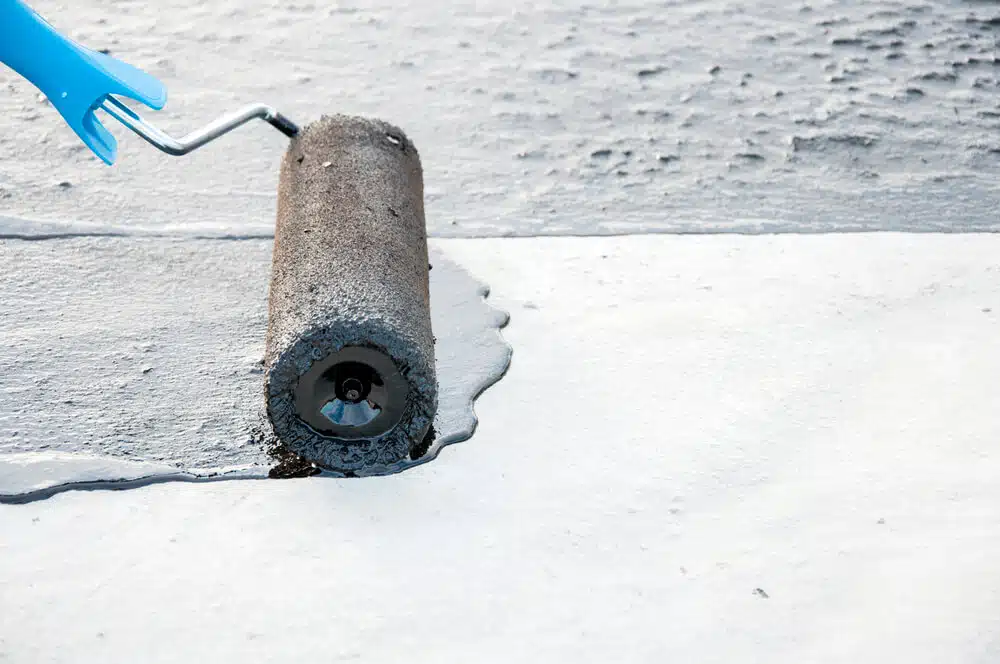
Recoating makes sense when the existing membrane is still attached and watertight, the insulation beneath it is dry, and the surface is approved for the coating system being used. In that situation a silicone or acrylic coating can restore the surface, add reflectivity and extend service life without the cost of tearing the roof off.

The 2021 International Building Code, adopted across Louisiana through the state uniform construction code from January 2023, specifically allows a new protective coating to go over an existing coating, metal panels, a built up roof, spray foam, modified bitumen or single-ply membrane without a tear off. That exception is why restoration exists as a category at all.
A roof is usually a good candidate when all of the following hold:
Big Easy Roofing handles commercial roof coating in the New Orleans area on exactly these roofs, and the preparation matters more than the product: cleaning, seam repair and replacing wet sections come before any coating goes down.
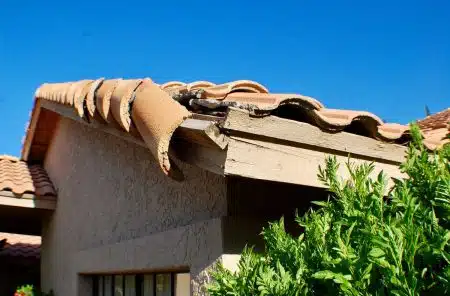
Replacement is the answer when the roof system is water soaked, when the deck itself is damaged, or when a new roof layer is needed over two or more existing layers of roof covering. The building code does not allow a new roof over one that is water soaked or too deteriorated to act as a base.
| What the assessment finds | Recoat | Replace |
|---|---|---|
| Membrane adhered, seams repairable, insulation dry | Usually a candidate | Not needed yet |
| Small, isolated wet areas | Possible after cutting out and replacing those areas | Depends on the extent, the cause and the deck |
| Wet insulation across large parts of the roof | No | Yes, the code bars recovering a water soaked roof |
| Two or more existing layers of roof covering | A new coating may still be allowed over an approved surface | The code’s recover rule bars another roof layer, so a new roof means removing them |
| Soft, rusted or rotten deck | No | Yes, with deck repair |
| Chronic ponding from poor slope | Only if drainage is corrected first | Often the chance to add tapered insulation |
A replacement is also the chance to redo what a coating cannot reach: the insulation, the fastening pattern for uplift, the edge metal and the drainage slope. On an older building that has been through several hurricane seasons, that reset is often worth more than the years a coating would add. Owners weighing a full commercial roof replacement in Louisiana are usually also choosing a new membrane, which is where the trade offs in TPO against EPDM for a New Orleans building come in.
A coating’s expected life is tied to how much material goes on, and manufacturers price that into their warranties. GAF, for example, lists 10, 15 and 20 year limited warranty terms for its Unisil silicone coating, with each longer term requiring a thicker application.
The practical difference is what happens at the end. A coating that was applied over a dry, sound roof may be eligible for another coating cycle when its term runs out, where the manufacturer allows it. A coating applied over a roof that was already wet does not get that second cycle, because the problem underneath keeps growing while the surface looks new.
So the honest comparison is not one coating against one new roof. It is a series of maintained coatings on a healthy roof against a replacement now, and that only works while the roof under the coating stays dry.
A useful assessment measures what is inside the roof, not just what the surface looks like. It should confirm whether the insulation is wet, how many roof coverings are already on the deck, whether the deck is sound, and whether the roof drains properly, because each of those can rule a coating in or out.
Owners who already follow a regular inspection schedule for a commercial flat roof in Louisiana usually have most of this history on file, which makes the decision faster and the quote easier to compare.
How often should a flat commercial roof be resealed?
There is no fixed interval. A coated roof is usually reassessed as its coating warranty term nears its end, and seams and flashings on any flat roof are worth checking regularly and after major storms.
What does EPDM stand for?
EPDM stands for ethylene propylene diene monomer, a synthetic rubber membrane used on flat and low slope commercial roofs.
Can a coating stop an active roof leak?
A coating is not a leak repair on its own. The source of the leak and any wet insulation around it have to be found and fixed first, or the coating can allow hidden damage to continue underneath.
Is recoating cheaper than replacing a commercial roof?
Recoating often costs less up front because it avoids tear off and disposal, but it only saves money when the roof underneath is dry and sound enough to last through the coating’s term.
Who can replace a commercial roof in Louisiana?
A commercial roofing project valued at $50,000 or more requires a contractor holding a commercial licence from the Louisiana State Licensing Board for Contractors, and owners can check a licence on the board’s public search.
Does Big Easy Roofing work on commercial roofs outside New Orleans?
Yes. Big Easy Roofing assesses, recoats and replaces commercial roofs in New Orleans and across Jefferson, St. Tammany, Tangipahoa and St. John the Baptist parishes.
If the roof over a Louisiana building is due for a decision, start with what is inside it. Call Big Easy Roofing at 504-800-8196 for a commercial roof assessment covering moisture, layer count, deck condition and drainage, with a written recommendation on whether a coating or a replacement makes sense. You can arrange the assessment first and decide afterwards.
Written by the Big Easy Roofing team, a Louisiana State Licensing Board for Contractors licensed roofing company working across Orleans, Jefferson, St. Tammany, Tangipahoa and St. John the Baptist parishes. The crew has restored and replaced flat commercial roofs through several hurricane seasons, and knows that the cheapest roof to own is usually the one whose insulation was checked before anyone picked a product.
Most people think of insulation as something that goes into the walls of thei...
Read More
A roof replacement in New Orleans runs about $9,829 on average, and that numb...
Read More What You Need to Know New Orleans’ tropical climate and aging housing s...
Read More You’ve been debating forever with yourself: metal vs. tile roofing, which is ...
Read More Are you facing serious roof issues that require professional assistance? ...
Read More Why Professional Roof Replacement is Worth the Investment? This question ofte...
Read More 



 By Big Easy Roofing
  Sep 29, 2026