
Matching old roof tile in New Orleans is a sourcing problem, not a roofing problem. The tile itself is usually fine; what is hard is finding more of the same profile once a handful have broken, because most of the shapes on older New Orleans roofs came from kilns that closed decades ago. There are four realistic routes: salvage from other roofs, a custom run reproduced from a sample, an imported tile whose profile is close enough, or moving the original tile to the visible elevation and putting the substitute somewhere it is not seen. Big Easy Roofing works on clay and barrel tile across New Orleans and the surrounding parishes, and the single most useful thing a homeowner can do is get a broken tile measured and photographed before anything else happens.
Last Updated: September 2026
A cracked tile on a New Orleans roof is rarely an emergency, and it is frequently the start of a long search. Big Easy Roofing works on tile across Orleans and Jefferson Parish, and the conversation almost always runs the same way: the repair is straightforward, the tile to do it with is not. This page is about that second half, which is where the time and the money actually go on an older tile roof.
Because the profile, not the material, is what has to match. Clay tile was made in hundreds of regional shapes, most of the kilns that produced them are long gone, and two tiles that look identical from the street will not sit together on a roof if their curves and laps differ.
The differences that stop a substitute working are small and unforgiving:
This is why the answer to a broken tile is so often a search rather than a purchase. The tile is not a stock item, it is a specific historical product, and the roof was built around its exact dimensions.

Mostly from other roofs. Reclaimed tile reaches the market when a building is demolished, re-roofed or partially stripped after storm damage, which means supply is unpredictable, regional and usually sold in whatever quantity happened to come off that particular roof. That particular batch cannot be reordered, because it was a roof rather than a product line.
That has a practical consequence most homeowners do not expect. Salvage supply moves in waves, and the waves follow demolition and storms rather than demand. A profile that is unobtainable one year can appear in volume the next because a single large building came down, and then disappear again. Anyone holding a tile roof with no spares is at the mercy of that timing.
The sensible response is to stop treating spare tile as something to buy when it is needed. On a roof carrying an obsolete profile, surplus tile found during any job is worth keeping rather than skipping, and a relay is the one moment when the whole roof is accessible and sound tiles can be set aside deliberately.
Sometimes, and it is often the more reliable route on a large repair. Several manufacturers will reproduce a discontinued profile from a sample tile, and imported tile can match older European shapes closely, though both cost more per tile and neither will match the weathering of the existing roof.
| Route | Best suited to | The catch |
|---|---|---|
| Salvage | Small repairs, and any roof where matching the weathered appearance matters most | Availability is unpredictable and quantities are whatever came off one roof |
| Custom reproduction from a sample | Larger areas, and roofs likely to need more tile again later | Higher cost per tile, lead time, and new tile that will not look aged |
| Imported close match | Roofs whose original profile followed a European pattern | Close is not identical, and a slight difference repeats across every course |
| Relocating existing tile | Any roof with a hidden elevation | Only works where a less visible slope can donate tile and take the substitute |
That last row is the one homeowners rarely think of. Original tile is moved to the elevation that faces the street, and the substitute goes on a rear or hidden slope. The National Park Service treats relocation of this kind as a legitimate repair option for historic tile roofs, on the condition that the substitute is technically compatible with the roof it is going onto, which rules out anything that laps or sits differently however close it looks. Where that condition holds it costs labour rather than materials.

More than the broken count, and usually by a wide margin. Handling breaks tile, salvage stock arrives with its own damage rate, and a roof needing tiles once will usually need them again, so buying only what is broken tends to mean repeating the search.
Reclaimed tile also arrives in mixed condition, which is normal rather than a sign of a bad supplier. Some will have hairline cracks that only show when handled, some will have mortar still attached, and some will simply be too weathered to sit alongside the rest. Sorting on delivery is part of the job.
The practical rule on an obsolete profile is to buy the search out rather than the repair. If a batch appears and the roof will plausibly need tile again, taking the whole batch is often worth more than the saving from buying part of it, particularly against the prospect of not finding any when the next storm goes through. Where the roof also needs work underneath, the economics of lifting and relaying a clay roof change that calculation again, because breakage during handling has to be covered from the same stock.
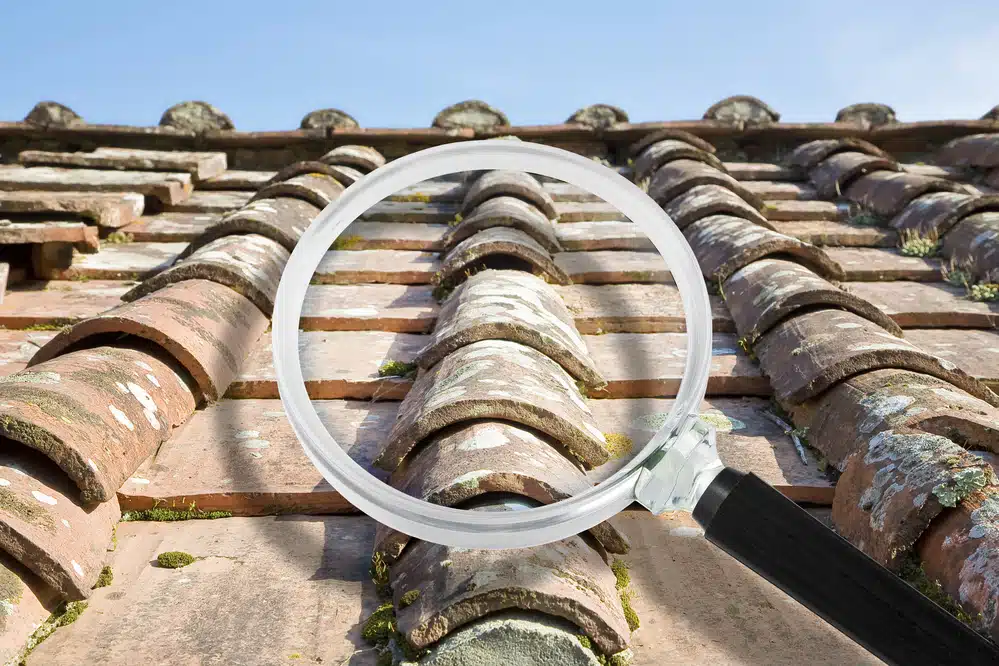
Photograph and measure the tile properly, because a sample is what every supplier will ask for. A clear shot of the face and the underside, the overall length and width, the cover width once laid, and the depth of the curve will identify a profile far faster than a description will.
Work of this kind is slow, unglamorous and exactly the sort of thing that separates a contractor who has done it before from one who has not, which is worth weighing when deciding who to put on an older roof. The same problem turns up on historic slate, where matching a failing slate roof runs into the identical sourcing wall. Profiles and shapes across barrel, mission and pan tile are set out on the Spanish and barrel tile pages, with the wider tile roofing section covering the other materials alongside clay.
Is reclaimed roof tile as good as new tile?
For matching purposes the variables that decide it are the breakage rate within a given batch and whether the profile is right, rather than the age of the tile.
Can a roofer tell which profile a tile is just from a photograph?
Often it narrows it down, but cover width and lap dimensions usually decide the answer, which is why a physical sample and a set of measurements beat photographs alone.
What happens if no match can be found at all?
The usual answer is to move original tile onto the most visible elevation and put the closest available substitute on a hidden slope, so the mismatch exists but nobody sees it.
Does mixing slightly different tiles cause leaks?
It can, because lap dimensions control how water is shed, so a tile that sits differently changes the drainage path rather than simply looking out of place.
Should spare tile be kept after a repair?
On any obsolete profile, yes. Surplus tile is far easier to store than to find later, and a small stock removes the sourcing delay entirely the next time something breaks.
Does Big Easy Roofing handle sourcing as well as the repair?
Yes. Big Easy Roofing works on clay and barrel tile across New Orleans, Metairie, Kenner and the surrounding parishes, including identifying a profile and tracking down matching or reproduced tile for it.
Is a full replacement ever cheaper than matching?
On a roof that is failing broadly rather than in spots it can be, because the sourcing problem disappears once the whole elevation is being redone, which is a calculation worth running rather than assuming.
If a tile has broken and nobody can tell you what it is, that is the part worth solving first. Call Big Easy Roofing at 504-800-8196 to have the profile identified and the options priced across New Orleans and the surrounding parishes, or send the details over and start with a photograph and a measurement.
Written by the Big Easy Roofing team, a Louisiana State Licensing Board for Contractors licensed roofing company working across Orleans, Jefferson, St. Tammany, Tangipahoa and St. John the Baptist parishes. The crew has chased discontinued tile profiles for New Orleans homes where the original kiln closed before anyone currently on the roof was born, and keeps salvage stock from jobs for exactly that reason.
One of the most common mistakes when filing roof insurance claims is a lack o...
Read More
Quick Summary An older roof in Metairie is rarely uninsurable, but it is ofte...
Read More Your roof is the beating heart of your home or business—it's the primary prot...
Read More Replacing a roof can be a daunting and expensive task. It's important to do y...
Read More Louisiana receives fewer hail events than states in Tornado Alley, but hail ...
Read More As water scarcity becomes an increasing concern worldwide, the significance o...
Read More 



 By Big Easy Roofing
  Sep 27, 2026