
Last Updated: May 2026
New Orleans homeowners think about hurricanes, wind, and rain when they think about roof damage. Hail rarely makes the list. That is understandable because Louisiana is not in the heart of hail country the way Texas, Oklahoma, and Kansas are. But hail does hit southeastern Louisiana, and when it does, it damages asphalt shingle roofs in ways that are hard to see from the ground but easy for a trained inspector to identify from the roof surface. The problem with hail damage is timing. If you do not know it happened and do not file a claim promptly, the damage compounds silently until the next heavy rain exposes it as a leak. Big Easy Roofing inspects for hail damage after every significant storm event in the New Orleans metro area.
Southeastern Louisiana averages 1 to 3 significant hail events per year, concentrated between March and May during the spring severe thunderstorm season. Most hail events produce stones under 1 inch in diameter, which is small enough to go unnoticed by homeowners but large enough to damage asphalt shingles. Larger hail events, with stones exceeding 1.5 inches, occur less frequently but cause immediate, visible damage to roofing, siding, and vehicles.
The hail risk in New Orleans is lower than in Dallas, Oklahoma City, or Kansas City, where major hail events happen multiple times per year. But “lower risk” does not mean “no risk.” A single hail event with 1-inch stones can damage every asphalt shingle roof in the affected area. Because homeowners in Louisiana are less attuned to hail than to hurricane damage, hail events often go unreported and uninspected, and the damage quietly worsens for months or years.
Hail impact on asphalt shingles creates specific marks that a trained inspector can distinguish from other types of damage. The key indicators are:
Random circular dents: Hail strikes are circular or irregular, not linear. They appear randomly across the roof surface without a pattern related to wind direction, roof features, or foot traffic paths. Each dent corresponds to a single hailstone impact.
Displaced or missing granules at the impact point: The force of the hailstone knocks granules loose, exposing the dark asphalt substrate underneath. These bare spots are visible as dark circles or patches on the shingle surface. Run your hand across a suspected impact point. It feels smooth where granules are missing and rough where they remain.
Soft spots in the shingle: Press on the dented area. If the mat underneath feels soft or gives under finger pressure, the hailstone fractured the fiberglass reinforcement mat inside the shingle. This is structural damage. The shingle will fail at that point regardless of how the surface looks.
Cracked or broken shingle tabs: Larger hailstones can crack shingles outright, creating visible fracture lines radiating from the impact point. This is most common on older, brittle shingles that have lost flexibility from heat aging.
Collateral damage confirms hail occurred: check gutters, downspouts, window screens, AC condenser fins, and soft metals like lead pipe boots. Hail dents on these surfaces confirm that hail hit the property and supports your insurance claim even if the shingle damage is subtle.
Distinguishing hail damage from wind damage matters for insurance claims because both are covered perils but may fall under different deductibles in Louisiana. Your adjuster needs to determine the cause of damage to apply the correct coverage.
Wind damage shows directional patterns. Missing shingles are concentrated on the windward slopes. Lifted or peeled shingles follow the prevailing wind direction. Creased shingles bend along a consistent axis. Wind damage is worst at roof edges, ridges, and hips where uplift forces are strongest.
Hail damage is random and non-directional. Impacts appear on all roof slopes, not just the windward side. Dents are scattered without relation to roof geometry or prevailing wind. The damage pattern is uniform density (roughly the same number of impacts per square foot) across all exposed surfaces.
Many storms produce both wind and hail simultaneously. Your roof may have both types of damage from a single event. A qualified inspector documents each type separately with photographs and descriptions so your adjuster can properly categorize the claim. Working with a roofer experienced with insurance claims in New Orleans ensures the documentation supports the correct coverage determination.

Ground-level signs to look for within 24 hours of a hail event:
If you see hail damage on any of these surfaces, your roof almost certainly took hits too. The shingles are designed to absorb more impact than thin aluminum or window screens, so shingle damage may be less obvious, but it is there.
Do not climb on the roof yourself. Hail-damaged shingles are slippery because loose granules act like ball bearings underfoot. Call a licensed roofer for a post-storm inspection. The inspector uses chalk to mark each impact point, counts the hits per square (test square area), photographs each mark, and provides a damage density assessment that your insurance company needs for the claim.
Yes. Hail damage is a covered peril under standard Louisiana homeowners insurance policies. The claim process follows the same steps as any storm damage claim: document the damage, file with your insurer, get a claim number, and schedule the adjuster inspection.
One important distinction in Louisiana: hail damage may fall under your standard “all perils” deductible rather than your hurricane deductible. Hurricane deductibles apply specifically to hurricane events as declared by the National Weather Service. A spring hailstorm that is not part of a named hurricane typically triggers the standard deductible, which is usually lower than the hurricane deductible. Confirm which deductible applies with your agent when you file.
Timing matters. File your claim as soon as you discover hail damage or have reason to suspect it occurred. Waiting months to report reduces your claim credibility because the insurer cannot verify the damage timeline, and additional weathering on already-damaged shingles makes it harder to distinguish hail impact from age-related wear.
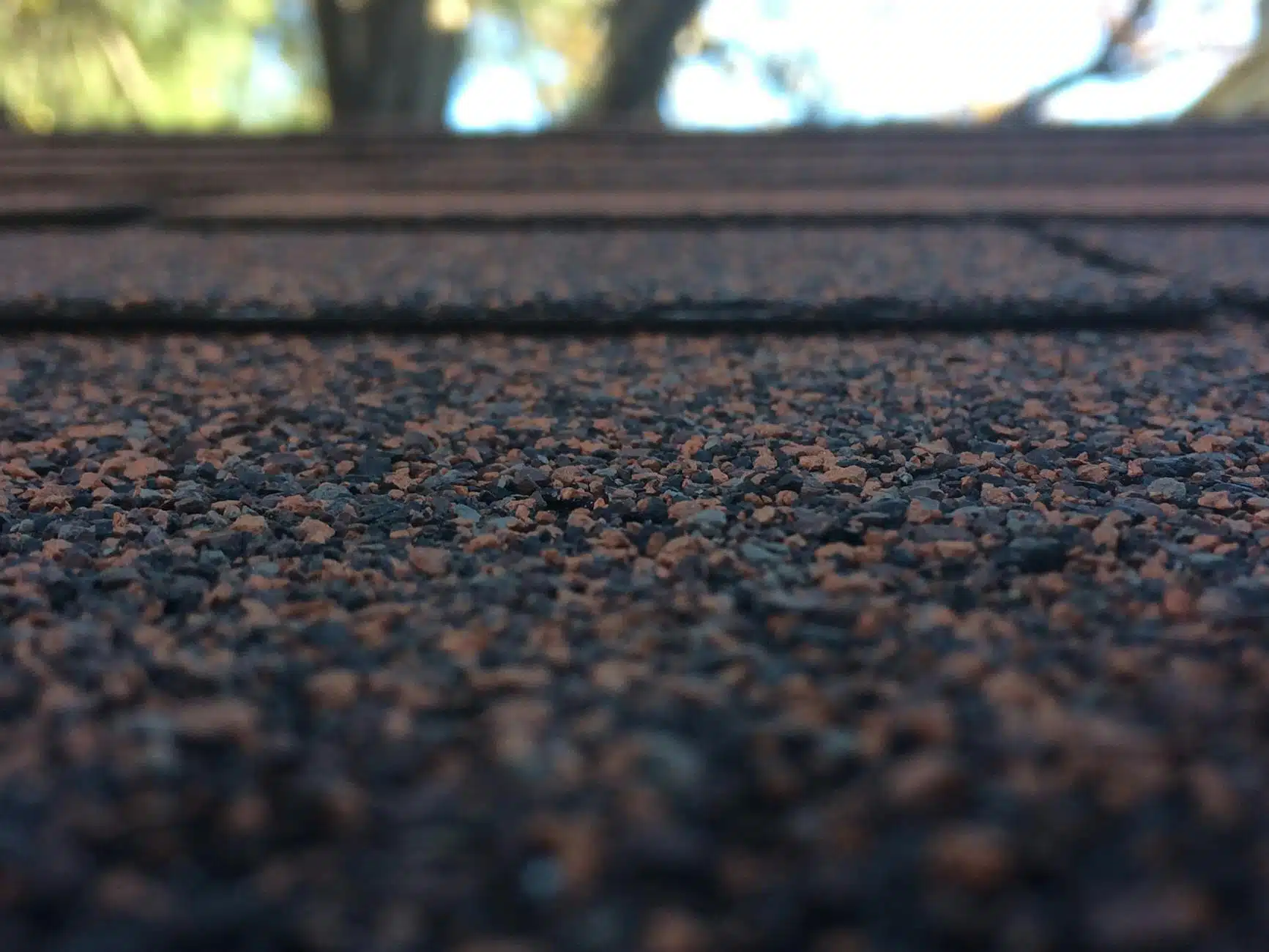
Class 4 impact-resistant shingles are rated to withstand a 2-inch steel ball dropped from 20 feet, which simulates large hail impact. They cost 15% to 25% more than standard architectural shingles. In hail-prone states like Texas and Colorado, they are increasingly standard. In Louisiana, the decision is more nuanced.
The case for impact-resistant shingles in Louisiana: they reduce damage from the hail events that do occur, they resist debris impact during hurricanes better than standard shingles, and some Louisiana insurers offer premium discounts for Class 4 rated shingles. The discount, combined with the reduced likelihood of filing hail claims, can offset the higher material cost over the roof’s lifespan.
The case for standard shingles: Louisiana’s hail frequency is low enough that many roofs go their entire 15 to 20 year lifespan without experiencing a significant hail event. If your home is in a part of the metro area with heavy tree canopy that provides some hail deflection, the risk is lower still.
If you are replacing your roof and considering materials, ask your contractor and insurer about the specific premium discount for Class 4 shingles on your policy. If the discount pays for the premium difference within 5 years, impact-resistant shingles are the straightforward financial choice. If the discount is minimal, standard architectural shingles that hold up in New Orleans weather are the practical option.
Yes. Hail 1 inch in diameter (about the size of a quarter) strikes at speeds of 30 to 40 mph and displaces granules from asphalt shingles on impact. On older or heat-aged shingles with reduced flexibility, 1-inch hail can also fracture the fiberglass mat underneath the surface.
Within 1 to 2 weeks. Prompt inspection documents the damage while it is fresh and before additional weathering obscures the impact marks. Insurance companies expect timely reporting, and delays can complicate or weaken your claim.
Louisiana law prohibits premium increases solely for Act of God claims. A single hail claim should not raise your premium. Multiple claims in a short period may affect your risk profile during underwriting renewal.
Most metal roofing materials resist hail better than asphalt shingles. Standing seam and corrugated metal may dent cosmetically from large hail but do not lose structural integrity. Painted metal finishes may chip at impact points, but the underlying metal remains waterproof.
Fresh hail damage shows bright, clean exposed asphalt at impact points where granules were displaced. Older hail damage shows weathered, oxidized asphalt at impact points because the exposed surface has been UV-aged. A trained inspector can estimate damage age based on oxidation level.
That depends on damage density. If a professional inspection finds 8 or more hail impacts per 100-square-foot test area across the roof, most insurers approve full replacement because the damage is widespread enough to compromise the roof system. Isolated impacts on one or two slopes may qualify for targeted repair rather than full replacement.
Hail damage is not an emergency in the way a missing shingle is, because the shingle is still in place. But the damaged areas will deteriorate faster than undamaged areas, and the next rain event can push water through fractured spots that were holding before the hail. File the claim and schedule repairs within 30 to 60 days of the inspection for the best outcome.
Are you facing serious roof issues that require professional assistance? ...
Read More
New Orleans has a long history with tile roofs. Walk through the French Quart...
Read More Attic ventilation is not something most New Orleans homeowners think about un...
Read More When it comes to your home, the roof is one of the most important components....
Read More Metairie roof replacement costs range from $9,000 to $18,000 for most single...
Read More Ponding water is any standing water that remains on a flat roof 48 hours af...
Read More 



 By Big Easy Roofing
  Aug 12, 2026