
Last Updated: May 2026
When your roof leaks near the eaves, the first assumption is a shingle problem. When your attic smells musty near the edge, you think ventilation. When paint peels on your soffit, you blame age. In many New Orleans homes, all three of these problems trace back to one source: gutters that stopped doing their job months or years ago. The connection between gutter failure and roof damage is not obvious because the damage happens behind the gutter where you cannot see it without looking specifically. Big Easy Roofing checks gutter-to-roof connections during every inspection because this is where hidden damage accumulates fastest in the New Orleans climate.
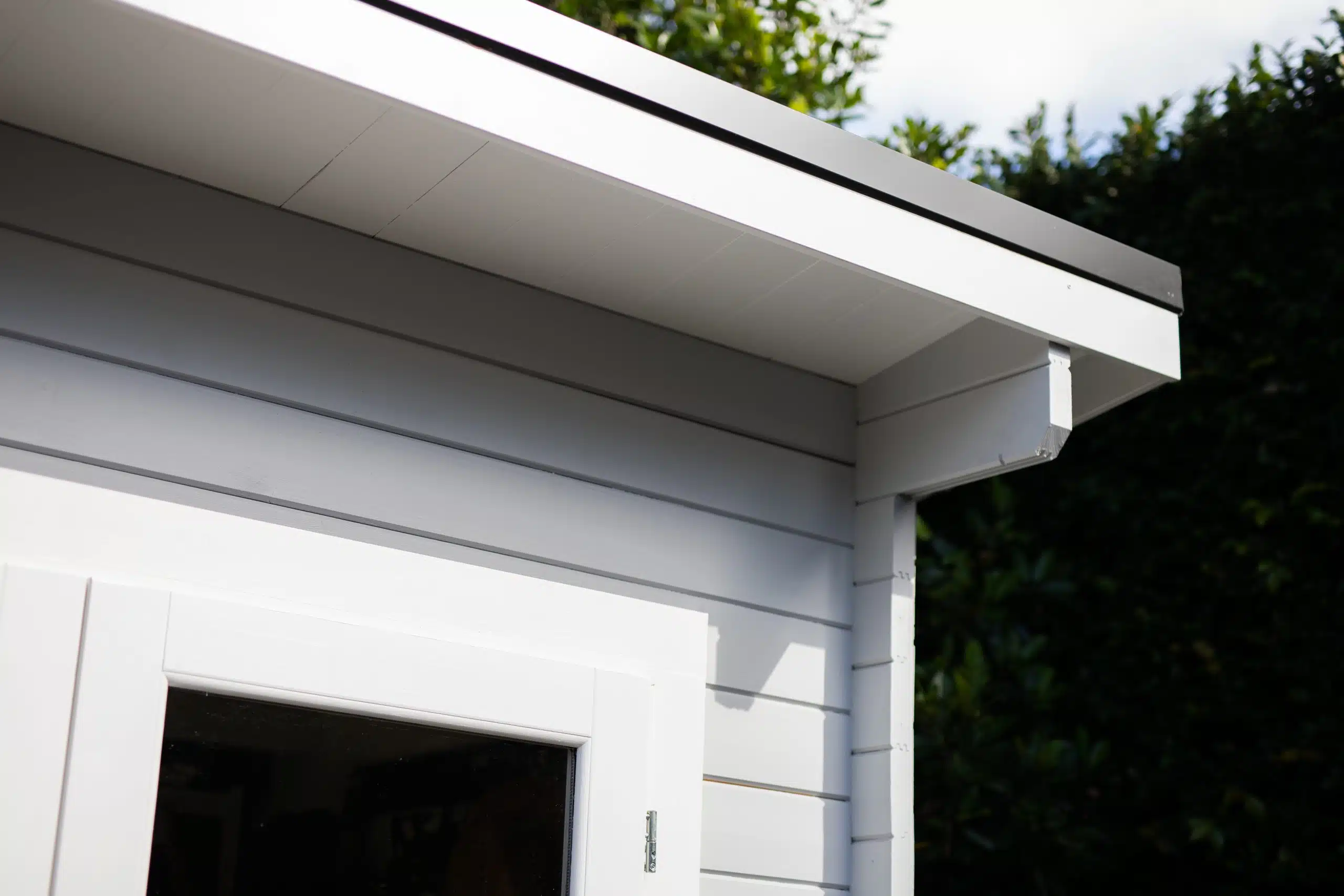
Gutters attach directly to the fascia board, which is the last piece of your roof framing visible from the outside. When gutters clog, overflow, or pull away from the house, water no longer flows through the downspouts and away from the structure. Instead, it follows three destructive paths simultaneously.
Path one: water spills over the back edge of the gutter and runs down the fascia face. This water saturates the wood on every rain event. In New Orleans humidity, the fascia never fully dries between storms, and rot sets in within a single season of consistent overflow.
Path two: water backs up at the gutter-to-roof junction and wicks under the bottom row of shingles through capillary action. The water travels uphill along the underside of the shingle and starter strip, saturating the roof deck edge. This creates leaks that appear in the attic near the eaves and are frequently misdiagnosed as a shingle installation problem.
Path three: once the fascia weakens, the gutter attachment points fail. The gutter sags, creating low spots that hold standing water. The additional weight pulls the gutter further away from the fascia, exposing the joint between the fascia and the soffit to direct rain. Water enters the soffit cavity and reaches the rafter tails, the attic edge, and the top of the exterior wall.
You can spot most of these from the ground without climbing a ladder. Walk the perimeter of your home after a rain event and look for:
1. Dark streaks or stains on the fascia below the gutter line. This is water overflow leaving mineral and dirt deposits as it runs down the board surface. Fresh stains mean active overflow. Old stains that have dried mean the overflow happened recently enough to leave residue.
2. Paint peeling, bubbling, or flaking on the fascia or soffit. Moisture trapped behind the paint layer forces the paint off the surface. If paint is failing only on the fascia and soffit near the gutters while the rest of the trim looks fine, water from the gutter system is the cause.
3. Visible gaps between the gutter and the fascia. The gutter should sit flush against the fascia along its entire length. If you can see daylight between the back of the gutter and the board, the fascia has either rotted and compressed, or the gutter hangers have pulled out of softened wood.
4. Gutter sagging at one or more hanger points. A level gutter holds slope toward the downspouts. A sagging gutter creates low points that hold standing water, which adds weight and accelerates the sag. Sagging always indicates either hanger failure or fascia deterioration at the attachment point.
5. Soil erosion or mulch displacement directly below the gutter edge. If water is hitting the ground at the foundation instead of exiting through downspouts, the gutters are overflowing. The splash pattern tells you where the overflow is worst.
6. Attic moisture or staining near the eaves. Water stains on the underside of the roof deck within 2 feet of the eaves, or damp insulation at the attic edge, suggest water is entering from the gutter junction rather than from a mid-roof failure. Check your attic with a flashlight after heavy rain and look specifically at the area where the roof deck meets the top plate of the exterior wall.
7. Wasp nests, bird activity, or pest entry at the soffit line. Animals exploit gaps created by rotted soffit panels. If you see pest activity at the roofline near gutter attachment points, the soffit has likely deteriorated enough to create openings.

The fascia carries the entire weight of the gutter system plus whatever water and debris the gutters hold at any moment. On a 40-foot gutter run during a New Orleans downpour, that combined load can reach several hundred pounds. The fascia was designed to handle the weight of an empty gutter, not a clogged one full of compacted debris and standing water.
Most fascia boards in New Orleans are pine or composite lumber, both of which deteriorate when exposed to sustained moisture. The gutter attachment point is the most vulnerable location because the hanger screws or nails create pathways for water to enter the wood grain. Once moisture reaches the interior of the fascia through these fastener holes, the rot spreads from the inside out. By the time the rot is visible on the surface, the interior of the board may be substantially compromised.
Replacing fascia is not a casual repair. It requires removing the gutter, cutting out the damaged section, sistering or replacing the rafter tail end if the rot has spread that far, installing new fascia lumber, priming and painting, and reattaching the gutter with new hangers. Cost runs $15 to $25 per linear foot including labor and materials. On a home with 150 linear feet of fascia, a full replacement reaches $2,250 to $3,750, a cost that proper gutter maintenance would have prevented entirely.
Please note: The prices in this article are estimates only, shared to help you plan. Your actual cost depends on your property, the materials and the size of the job. For pricing on your project, call Big Easy Roofing at (504) 800-8196 for a quote.
Capillary action is the tendency of water to travel along surfaces and through narrow gaps against gravity. When a gutter is clogged and water backs up to the level of the roof edge, the standing water contacts the bottom edge of the shingle overhang. The water follows the underside of the shingle inward, traveling between the shingle and the starter strip, between the starter strip and the drip edge, and along the drip edge-to-deck joint.
The distance water can travel through capillary action is small, typically 1 to 3 inches. But that is enough to reach the roof deck edge and the top of the fascia from behind. Drip edge metal, when properly installed, blocks this path by creating a physical break between the roof deck and the gutter. If the drip edge is missing, bent, or improperly overlapped, the capillary path is open.
Many New Orleans homes built or reroofed before 2010 have inadequate drip edge installation. If your home has gutter overflow problems and your roof leaks near the eaves during heavy rain, the combination of gutter backup and missing or failed drip edge is a likely cause.
Repair makes sense when the damage is localized and the gutter system is under 15 years old. Common repairs include:
Replacement makes sense when gutters show widespread corrosion, multiple sections are sagging despite hanger repairs, seams leak at 3 or more joints, or the gutter is the wrong size for the roof area. Seamless aluminum gutters cost $6 to $12 per linear foot installed in New Orleans. Half-round gutters for historic homes run $12 to $20 per linear foot.
If you are replacing fascia, always replace the gutter hangers at the same time. New hangers into fresh fascia create solid attachment points. Old hangers into new fascia reuse the weak link that failed before.
Clean gutters 3 to 4 times per year. This is the single most effective prevention step and costs $100 to $300 per cleaning. For the cost of two cleanings per year, you prevent thousands of dollars in fascia, soffit, and roof deck repairs.
Check gutter slope after cleaning. Gutters should drop approximately 1/4 inch per 10 feet toward the nearest downspout. If water stands in any section 15 minutes after rain stops, the slope needs adjustment.
Inspect drip edge during any roofing work. Drip edge metal should extend into the gutter channel, creating a clean break between the roof deck and the gutter back wall. If drip edge is missing or does not reach into the gutter, add it during the next reroofing project or as a standalone repair.
Verify downspout capacity. Each downspout serves a specific length of gutter run. If your gutters overflow during heavy rain despite being clean, the system may need additional downspouts rather than larger gutters. A roofer can calculate the correct downspout count for your roof’s drainage volume. Schedule this assessment during your next annual roof maintenance visit.
Most manufacturer warranties require homeowners to maintain the roofing system, which includes gutters and drainage. Damage caused by gutter neglect, such as fascia rot and deck edge deterioration, may not be covered under warranty if the insurer determines the damage resulted from deferred maintenance rather than a material defect.
Press on the fascia with your thumb at several points along its length. Healthy wood feels solid and resists pressure. Rotted wood gives under thumb pressure and may feel spongy or soft. You can also check behind the bottom edge of the gutter where it meets the fascia; this area is often the first to show visible rot or paint failure.
Drip edge should extend over the back edge of the gutter, directing water into the gutter channel. If drip edge terminates above the gutter or does not reach into the channel, water can run behind the gutter and down the fascia, which is exactly the problem drip edge is designed to prevent.
Three possible causes: the gutters are undersized for the roof area and rainfall intensity, the downspouts are too few or too small to handle the flow volume, or the gutter slope has flattened over time and water is not reaching the downspouts fast enough. A gutter capacity assessment identifies which factor is limiting flow.
Combined replacement for a typical New Orleans home (150 to 200 linear feet) runs $3,000 to $7,000 depending on fascia lumber type, gutter style, and accessibility. Homes with two-story sections or complex rooflines cost more due to scaffolding and additional labor.
If the fascia behind the gutter is solid, reattaching a hanger is a straightforward repair with a drill and replacement hangers. If the fascia is soft or rotted at the hanger point, the wood needs to be repaired first, which requires removing the gutter section. Attempting to rehang a gutter in rotted fascia will fail again within months.
Quick Summary Any claim decision on an older Metairie roof is made by the ins...
Read More
New Orleans sits right in the path of Gulf of Mexico hurricanes. That is not ...
Read More New Orleans is hard on roofs. Between the year-round humidity, summer storms ...
Read More New Orleans roofs take a beating — hurricane-force winds, 60+ inches of rain ...
Read More Are roofing estimates negotiable? Homeowners often have to face this question...
Read More Do you know the difference between a gable roof and a gambrel roof? How about...
Read More 



 By Big Easy Roofing
  Jun 11, 2026