
Roo
f flashing is metal or rubber sealing material installed at roof joints like chimneys, dormers, and valleys to prevent water infiltration. New Orleans experiences exceptionally high flashing failure rates due to 62 plus inches of annual rainfall, intense thermal cycling from extreme heat, salt air corrosion near the Gulf, and improper installation common in post-storm repairs. Recognizing signs of flashing failure such as water stains, rusted edges, and cracked sealant enables homeowners to address issues before they become costly water damage. Understanding the differences between repair and replacement, and how flashing ties into the FORTIFIED roof standard, helps New Orleans residents protect their properties and maintain insurance coverage.
Roof flashing is protective metal or rubber material installed at areas where the roof meets walls, chimneys, vent pipes, and other penetrations. Its primary function is to create a waterproof seal that channels rainwater away from vulnerable joints and into the gutter system. Without properly installed and maintained flashing, water can seep behind shingles and cause structural rot, mold, and interior water damage. In New Orleans, where homes range from centuries-old French Quarter residences to modern Uptown and Metairie properties, flashing is one of the most critical roofing components.
Flashing is installed in several key locations:
Roof flashing is manufactured from different metals and materials, each with varying durability and cost profiles. The material chosen affects how long the flashing will perform in New Orleans’ harsh climate. Most residential installations use one of these primary materials.
New Orleans presents a uniquely challenging environment for roof flashing. The combination of climate, geography, and architectural complexity creates conditions that accelerate flashing deterioration. Understanding these factors helps homeowners and contractors recognize schedule regular roof inspections inspection and maintenance are essential.
New Orleans receives over 62 inches of rainfall annually, compared to the national average of 38 inches. Frequent heavy downpours test flashing integrity constantly. When rainfall intensity increases, water pressure builds against flashing seams. If sealant has cracked or flashing has shifted even slightly, water penetrates into the layers beneath the roof covering. This moisture sits in attic spaces, framing, and wall cavities, promoting mold growth and wood rot that spreads throughout the home.
New Orleans experiences extreme heat during summer months, with surface temperatures on metal roofing often exceeding 140° Fahrenheit. At night, temperatures drop significantly. This daily expansion and contraction creates stress on flashing seams and fasteners. Over many heating and cooling cycles, sealant cracks, fastener holes enlarge, and overlapping flashing pieces begin to separate. Historic homes in the French Quarter, Garden District, and Uptown neighborhoods are particularly vulnerable because older flashing materials and installation methods were not designed for this thermal stress.
Homes closer to Lake Pontchartrain and the Gulf of Mexico are exposed to salt air that accelerates metal corrosion. Galvanized and aluminum flashing deteriorate faster in coastal environments. The salt deposits on metal surfaces create an electrochemical reaction that eats through protective coatings. In Metairie and other areas near the lake, homeowners often notice rust streaks and pitting in flashing within 10–15 years, whereas inland areas may see 20 plus year lifespans for the same materials.

Older homes in the French Quarter, Garden District, Uptown, and other historic neighborhoods feature complex roof designs with multiple gables, dormers, chimneys, and skylights. Each of these features requires properly executed flashing. Post-storm repairs, particularly after hurricanes, often involve quick replacements that prioritize speed over precision. Improper step flashing installation, incorrect overlap angles, and inadequate sealant application are common in rush jobs. These installation errors compound over time as the flashing fails prematurely.
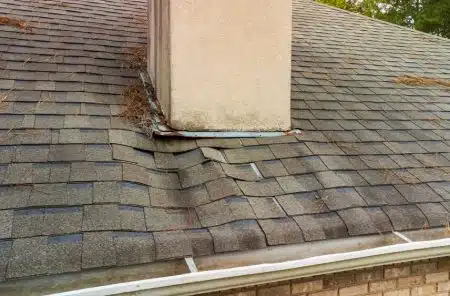
Early detection of flashing problems can prevent expensive water damage. Homeowners should perform periodic visual inspections, particularly after heavy rainstorms or in spring and fall keep up with roof maintenance maintenance is most effective. Big Easy Roofing recommends an annual professional inspection to catch flashing issues before they escalate.
The decision to repair or replace flashing depends on the extent of damage, material type, and age of the installation. Minor issues can often be addressed with resealing or small patches, but extensive damage typically requires full replacement. Big Easy Roofing evaluates each flashing situation individually during a professional book a roof inspection.
If flashing material remains intact but sealant has cracked or pulled away, resealing may be sufficient. Small rust spots that have not penetrated through the metal can sometimes be cleaned, primed, and painted. Fastener holes that have enlarged slightly can be addressed by using larger fasteners or sealant compounds. However, repairs are typically temporary solutions that delay the inevitable replacement.
Severely rusted flashing, large separated seams, metal that has developed holes or cracks, and flashing that has shifted from original position all warrant plan your roof replacement. If the flashing material is more than 20 years old in a New Orleans climate, replacement is typically the more cost-effective long-term solution. New Orleans property owners should expect flashing to require replacement every 15–25 years depending on material type and maintenance history.
Step flashing and continuous flashing serve different roof configurations. Understanding when each is appropriate ensures water is properly diverted from vulnerable roof areas. Both types require correct installation to prevent water intrusion in humid New Orleans conditions.
Step flashing consists of individual rectangular pieces installed in a stair-step pattern where a wall or chimney meets the roof. Each step is installed under one course of shingles and over the next course, creating an overlapped water barrier. Step flashing is commonly used at chimneys, walls that intersect a roof plane, and where dormers connect to the main roof. Each step typically covers 10–12 inches horizontally and extends 6–8 inches up the wall or chimney.
Continuous flashing is a single long piece of metal that runs the entire length of a roof transition. It’s used along the entire side of a dormer, skylight, or wall that meets the roof. Continuous flashing is more labor-intensive to install but provides superior water protection because it eliminates the individual seams found in step flashing. In New Orleans homes with complex rooflines common in Garden District and Uptown neighborhoods, continuous flashing is often recommended for maximum durability.
The FORTIFIED roof standard, developed by the Insurance Institute for Business and Home Safety, establishes rigorous construction standards for wind and water resistance. Proper flashing installation is a critical component of FORTIFIED certification. When a roof meets FORTIFIED standards, insurance companies may offer premium discounts because the home is better protected against weather-related damage. In New Orleans, where hurricane risk is significant, achieving FORTIFIED certification can result in meaningful insurance savings over time.
FORTIFIED standards require that all flashing be properly installed with correct overlap, secured with corrosion-resistant fasteners, and sealed with high-quality materials rated for the local climate. Regular inspections and prompt repairs of flashing problems help maintain FORTIFIED compliance. Big Easy Roofing is familiar with these standards and can advise homeowners on how flashing maintenance impacts their FORTIFIED roof status and check your insurance coverage.
Insurance companies investigate the cause of water damage claims extensively. If an adjuster determines that flashing failure caused the water damage, the claim may be denied because the damage resulted from lack of maintenance rather than a covered peril like storm wind. Homeowners who maintain flashing in good condition and can document regular inspections are better positioned to have claims approved. Conversely, evidence of long-term flashing deterioration often triggers claim denials. This makes preventive maintenance and professional inspections financially critical for New Orleans homeowners.
If you suspect flashing damage or want to prevent problems before they start, schedule a professional roof inspection to identify any issues. For properties with existing flashing problems, roof flashing repair services are available for quick fixes and comprehensive replacements. Those who have experienced water leaks can benefit from roof leak detection services to pinpoint the source. For comprehensive roof assessment, visit the Big Easy Roofing or explore general get your roof repaired options. In emergency situations such as storm damage, emergency roofing services are available 24/7 to protect your property immediately.
Roof flashing is metal or rubber material installed at vulnerable roof joints to prevent water intrusion. It’s used at chimneys, dormers, valleys, vent pipes, skylights, and wall-to-roof transitions.
New Orleans experiences 62+ inches of annual rainfall, extreme heat cycling, salt air corrosion near Lake Pontchartrain and the Gulf, and complex rooflines in historic neighborhoods that are prone to improper installation.
Look for water stains around chimneys, rusted or lifted flashing edges, cracked sealant, and water damage in attics or upper-level rooms.
Minor sealant cracks can be resealed, but severely rusted, bent, or separated flashing requires replacement to ensure a watertight seal.
Step flashing is individual pieces installed in a stair-step pattern where walls meet roofs, while continuous flashing runs continuously along dormers or wall transitions.
Insurance companies may deny water damage claims if flashing failure is identified as the cause, making regular maintenance and inspection critical.
The FORTIFIED standard includes proper flashing installation as part of wind and water resistance certification, which can reduce insurance premiums.
Roof flashing problems require prompt professional attention to prevent costly water damage. Call Big Easy Roofing at (504) 800-8196 to schedule a free inspection or get a quote. The team handles everything from emergency tarping to full replacements, and every roofing project comes backed by a 24-hour roof replacement guarantee once payment is received.
Assessing Your Roofing Needs In the journey towards finding the perfect roof...
Read More
Your roof has to deal with a lot in New Orleans. Between hurricane-force wind...
Read More Summary: Siding installation mistakes that might go unnoticed in drier clim...
Read More A roof replacement in New Orleans runs about $9,829 on average, and that numb...
Read More New Orleans is hard on roofs. Between the year-round humidity, summer storms ...
Read More Did you know that most roof damage is due to neglect, especially during the h...
Read More 



 By Big Easy Roofing
  Apr 12, 2026