

Commercial Roof Leak Detection in Madisonville, LA
Big Easy Roofing traces commercial roof leaks across Madisonville and the Lake Pontchartrain shore of St. Tammany Parish. The covering on the roof decides the test, and Louisiana’s amended building code names some coverings that get an ice barrier at the edge.
Madisonville commercial roof leak detection at a glance
Finding a commercial roof leak starts with the covering. A single ply membrane is tested, electronically or with a controlled flood. Louisiana’s amended IBC 1507.1.2 names other coverings, including shingles and mineral-surfaced roll roofing, that get an ice barrier at the roof edge.
Single ply membranes
In our practice, electronic leak detection or a controlled flood test is chosen for the membrane and the structure.
The named coverings
The amendment names asphalt shingles, metal roof shingles, mineral-surfaced roll roofing, slate and slate-type shingles, wood shingles and wood shakes.
The ice barrier
For those coverings, it calls for an ice barrier from the lowest roof edges to at least 24 inches inside the exterior wall line.
Two ways to build it
Not less than two layers of underlayment cemented together, or a self-adhering polymer modified bitumen sheet in place of normal underlayment.
What it does not say
The amendment lists coverings, and its text names no slope limit. It does not name TPO, EPDM or other single ply membranes.
Not a leak diagnosis
It says the ice barrier shall be installed. It does not say why a roof leaks, or whether it applies to a roof installed before it.
Commercial leak detection is scoped to the roof, so call Big Easy Roofing for a price on yours.
Electronic leak detection against the controlled flood test
On a single ply membrane, these methods answer the same question by different physics. The membrane type, the size of the area and whether the roof can carry the weight of a flood decide between them, and the table sets out how each works and where each fits.
| Method | How it works | Where it fits | Where it does not |
|---|---|---|---|
| Low voltage scanning | A small voltage on the wetted membrane, and a scanner finds where current passes | Large open low slope roofs with an insulating membrane | Conductive membranes and foil facers |
| High voltage spark testing | A wand over a dry membrane; a breach registers as a spark | Smaller areas and details around penetrations | Any membrane the manufacturer says it may damage |
| Controlled flood test | Water dammed to a controlled depth, interior watched | A defined area where the structure can carry the load | Large areas, and spaces below that cannot take water |
| Shingle, roll roofing, slate or wood | Read from the edge and the penetrations inward | The coverings the amendment names | Membrane test methods |
Membrane suitability for electronic testing is checked against the manufacturer first.
Louisiana's amended ice barrier line, and the coverings it names
Louisiana amends section 1507.1.2 of the International Building Code. For the coverings it lists, the amendment calls for two cemented layers of underlayment or a self-adhering sheet from the lowest roof edges to at least 24 inches inside the exterior wall line. Its text names no slope limit.
Which coverings
It reads: “An ice barrier shall be installed for asphalt shingles, metal roof shingles, mineral-surfaced roll roofing, slate and slate-type shingles, wood shingles, and wood shakes.”
How it is built
It continues: “The ice barrier shall consist of not less than two layers of underlayment cemented together, or a self-adhering polymer modified bitumen sheet shall be used in place of normal underlayment”
How far
And: “extend from the lowest edges of all roof surfaces to a point not less than 24 inches (610 mm) inside the exterior wall line of the building.”
Where to read it
The amendments are under Additional Information on the St. Tammany Parish Permits and Inspections page.
What we take from that
On a roof with one of the named coverings, in our practice the edge is one of the places a leak near the exterior wall is checked.
The quoted text does not say whether it applies to a roof installed before it. That question is for the office that covers the address.
Single ply membranes
The amendment does not name TPO, EPDM or other single ply membranes.
On those roofs, the membrane itself is tested.
Why it matters on a Madisonville building
Madisonville sits where the Tchefuncte River meets Lake Pontchartrain, and in our experience wind driven rain finds the edges of a roof first. Testing the membrane directly, or reading the roof from the edge in, finds the entry point rather than where the water shows inside.
Where water shows is not where it enters
In our experience, water travels before it shows on a ceiling.
That is why the entry point is traced, not guessed.
Wet insulation
A leak that has run for a while can wet the insulation below the membrane.
The commercial inspection page covers the moisture survey.
Tenants below
In our experience, most commercial leak work happens over a working business.
The method is chosen with the space below in mind.
Big Easy Roofing Process
Four steps. The covering decides the method.

01 Identify the covering
Single ply membrane, or one of the coverings the amendment names.
02 Choose the method
Electronic, flood test, or reading from the edge in.
03 Find the entry point
Marked, photographed and explained.
04 Write the repair
What let the water in, and what fixes it.
Everything else we do in Madisonville
The rest of the Big Easy Roofing services available in Madisonville, each with its own page and scope of work. Where a leak has wet the insulation, the commercial inspection page covers the moisture survey that follows, and the repair is scoped once both are done.
Roof Replacement in Madisonville
Read More
Roof Repairs in Madisonville
Read More
Roof Inspection in Madisonville
Read More
Hail Damage Roof Repair in Madisonville
Read More
Storm Damage Roof Repair in Madisonville
Read More
Storm Damage Emergency Response in Madisonville
Read More
Emergency Roofing in Madisonville
Read More
Roof Leak Detection in Madisonville
Read More
Roof Maintenance in Madisonville
Read More
Roof Coating in Madisonville
Read More
Roof Ventilation in Madisonville
Read More
Roof Weatherproofing in Madisonville
Read More
Roof Restoration in Madisonville
Read More
Roof Flashing Repair in Madisonville
Read More
Fascia Board Installation and Repair in Madisonville
Read More
Gutters and Downspouts Installation in Madisonville
Read More
Gutters and Downspouts Repair in Madisonville
Read More
Siding Installation in Madisonville
Read More
Asbestos Roof Removal in Madisonville
Read More
Roof Damage Documentation in Madisonville
Read More
Commercial Roof Replacement in Madisonville
Read More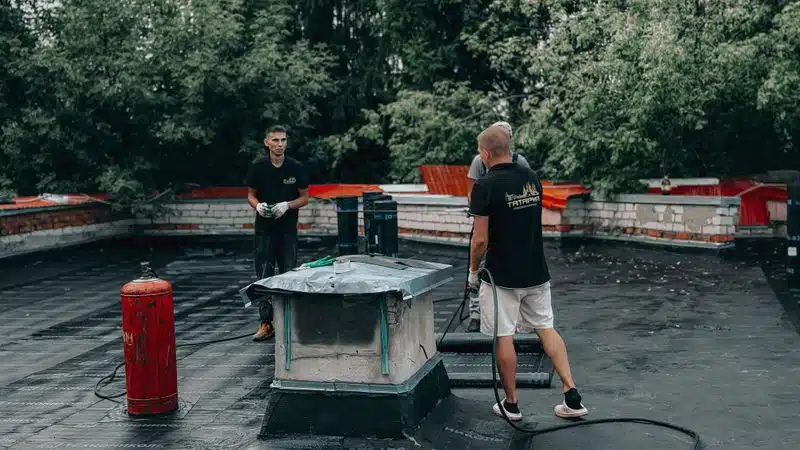
Commercial Roof Repairs in Madisonville
Read More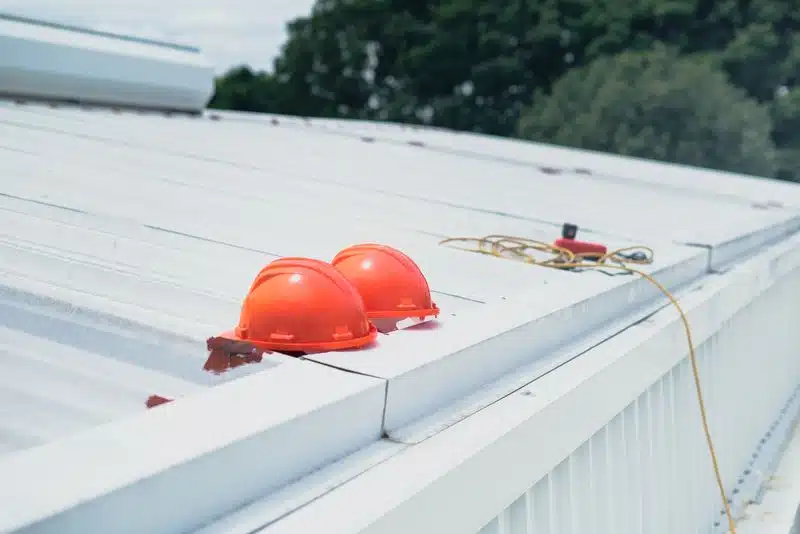
Commercial Roof Inspections in Madisonville
Read More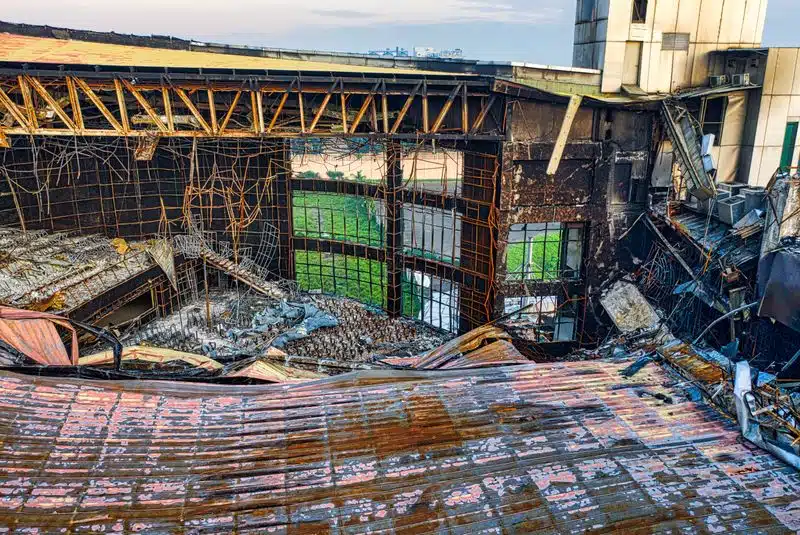
Commercial Hail Damage Repair in Madisonville
Read More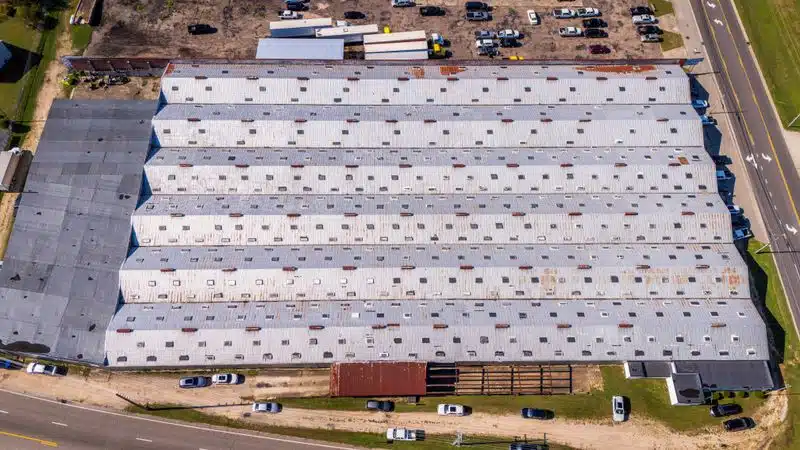
Commercial Re-Roofing in Madisonville
Read More
Commercial Roof Coating in Madisonville
Read More
Commercial Elastomeric Coatings in Madisonville
Read More
Commercial Roof Ventilation in Madisonville
Read More
Commercial Siding Installation in Madisonville
Read MoreMadisonville Commercial Roof Leak Detection FAQs
The ice barrier line and the coverings it names, test methods on membranes, and how the work is priced.
Topic
Question not here?
Ask us about a commercial roof leak in Madisonville. No charge and no obligation.
Call (504) 800-8196What does Louisiana's amended IBC 1507.1.2 say?
It calls for an ice barrier on asphalt shingles, metal roof shingles, mineral-surfaced roll roofing, slate and slate-type shingles, wood shingles and wood shakes, from the lowest roof edges to at least 24 inches inside the exterior wall line.
Does that apply to a single ply membrane roof?
The amendment lists specific coverings, including mineral-surfaced roll roofing, and its text names no slope limit. It does not name TPO or EPDM.
Which leak detection method is best for a membrane roof?
It depends on the membrane, the area and whether the structure can carry a flood test. Electronic suitability is checked against the manufacturer first.
Which office covers a commercial repair in Madisonville?
The Town or St. Tammany Parish, depending on the address. Town Hall on (985) 845-7311 confirms which.
What does commercial leak detection cost?
It is scoped to the roof, the method and the access, so the price follows a look at the building.
Get the leak traced to the entry point on a Madisonville building
We identify the covering, choose the method for it, and write up where the water gets in and what fixes it. If you would rather start in writing, tell us what the job involves and we will come back with an estimate.
Call (504) 800-8196